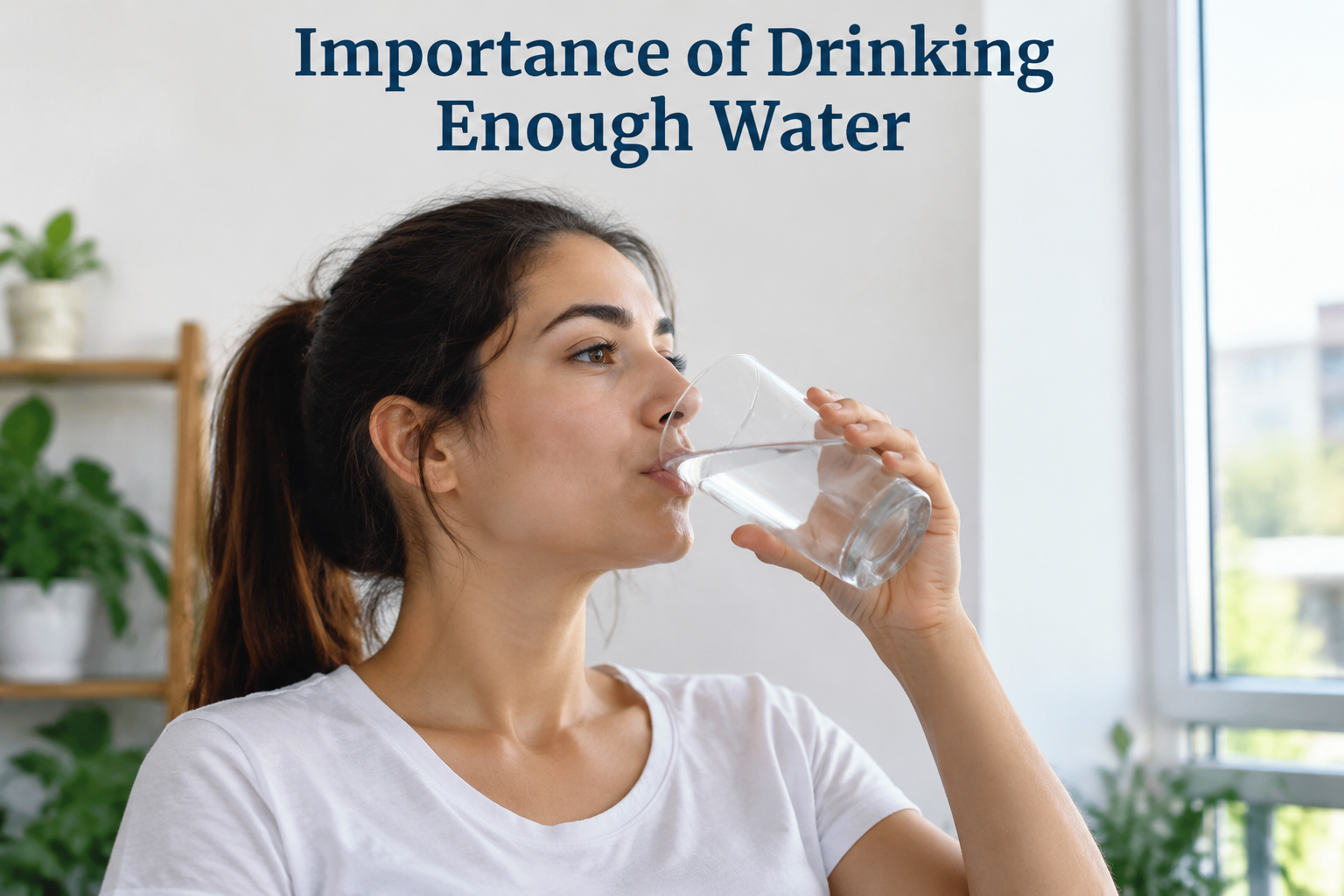
Water is one of the most important elements needed for human survival. Every cell, tissue, and organ in our body depends on water to work properly. Although drinking enough water is a simple habit, many people do not give it the attention it deserves. A lack of proper hydration can affect energy levels, digestion, concentration, skin health, and overall well being. Understanding the importance of drinking enough water can help you build a healthier lifestyle and protect your body from many common problems.
Our body contains a large amount of water, and this water performs many essential functions every day. It helps regulate body temperature, transport nutrients, remove waste, protect joints, and support normal body processes. Without enough water, the body struggles to maintain balance, and even mild dehydration can make you feel tired, weak, and uncomfortable.
Drinking enough water is not only about preventing thirst. Thirst is actually a signal that your body may already need more fluids. Developing a regular water drinking routine allows your body to stay hydrated before dehydration symptoms appear. A healthy hydration habit is one of the easiest and most effective ways to support long term health.
Why Water Is Important for the Human Body
Water plays a vital role in almost every function of the body. It acts as a building material for cells and helps maintain the structure of tissues. The blood, which carries oxygen and nutrients throughout the body, also contains a significant amount of water. When the body does not receive enough water, blood circulation can become less efficient, affecting energy and physical performance.
One of the main functions of water is temperature control. When the body becomes warm, especially during exercise or hot weather, it produces sweat to cool itself. Sweat contains water, and replacing these lost fluids is necessary to prevent overheating.
Water also helps the kidneys remove waste products from the blood. Proper hydration allows the kidneys to function effectively and maintain a healthy balance of minerals and fluids in the body. Drinking enough water supports natural detoxification by helping the body remove unnecessary substances through urine.
Water Supports Better Digestion
A healthy digestive system requires enough water to work properly. Water helps break down food and allows nutrients to be absorbed more easily. It also keeps the digestive tract functioning smoothly.
Many people experience constipation because they do not drink enough water. When the body lacks fluids, the large intestine absorbs more water from waste material, making stools harder and more difficult to pass. Drinking enough water along with eating fiber rich foods can support regular bowel movements and improve digestive health.
Water also helps prevent discomfort such as bloating and heaviness after meals. A properly hydrated digestive system can process food more efficiently and maintain a healthy balance inside the body.
Drinking Water Improves Energy Levels
Feeling tired during the day is sometimes linked to dehydration. Water is essential for transporting oxygen and nutrients to cells, which are needed for energy production. When the body does not have enough water, normal activities can feel more difficult.
Many people choose coffee or sugary drinks when they feel low in energy, but sometimes the body simply needs water. Maintaining proper hydration throughout the day can help you feel more active and refreshed.
Athletes and people who perform physical activities especially need enough water because exercise increases fluid loss through sweating. Replacing lost fluids helps maintain strength, endurance, and physical performance.
Water Helps Improve Brain Function
The brain depends heavily on water to work properly. Even a small reduction in hydration levels can affect concentration, memory, and mood. People who do not drink enough water may experience difficulty focusing, headaches, or mental tiredness.
Drinking enough water supports communication between brain cells and helps maintain normal brain activity. Whether you are studying, working, or performing daily tasks, proper hydration can help your mind stay alert and focused.
For students and professionals, keeping a water bottle nearby can be a simple reminder to drink regularly and maintain better concentration throughout the day.
Importance of Water for Healthy Skin
Many people search for expensive skincare products to improve their skin, but hydration is one of the basic factors that supports healthy skin. Water helps maintain skin moisture and supports normal skin functions.
When the body is dehydrated, the skin may appear dry, dull, and less fresh. Drinking enough water helps the body maintain proper fluid balance, which can contribute to a healthier appearance.
However, healthy skin also depends on a balanced diet, good sleep, sun protection, and proper skincare habits. Water is an important part of overall skin health but works best as part of a complete healthy lifestyle.
Water Supports Weight Management
Drinking enough water can support healthy weight management in several ways. Sometimes people confuse thirst with hunger and eat extra food when their body actually needs fluids. Drinking water regularly can help you recognize true hunger signals.
Water has no calories, making it a healthier choice compared with sugary beverages. Replacing soft drinks and high calorie drinks with water can reduce unnecessary calorie intake.
Drinking water before meals may also help some people feel more satisfied, which can support better portion control. Combined with a balanced diet and regular physical activity, proper hydration can become a useful part of a healthy weight management plan.
How Much Water Should You Drink Daily
The amount of water a person needs depends on several factors including age, body size, activity level, climate, and overall health. There is no single amount that works perfectly for everyone.
People who exercise regularly, work outdoors, or live in hot environments may need more water because they lose more fluids through sweat. Similarly, during illness with fever, vomiting, or diarrhea, the body may require additional fluids.
A simple way to monitor hydration is by paying attention to thirst and urine color. Dark yellow urine can be a sign that you may need more fluids, while light colored urine usually indicates better hydration.
Best Times to Drink Water
Drinking water throughout the day is better than consuming a large amount at one time. Starting your morning with a glass of water can help replace fluids lost during sleep.
Drinking water before and after physical activity is also important. During exercise, small and regular amounts of water can help maintain hydration levels.
It is also helpful to drink water with meals because it supports digestion. However, there is no need to force excessive amounts of water if your body does not require it.
Signs That Your Body Needs More Water
The body gives several signals when it needs more fluids. Common signs of dehydration include thirst, dry mouth, tiredness, dizziness, headache, and dark colored urine.
Severe dehydration can become dangerous and may affect normal body functions. This is why developing a daily water drinking habit is better than waiting until strong symptoms appear.
Children, older adults, and people involved in heavy physical activities should pay special attention to hydration because they may become dehydrated more easily.
Healthy Ways to Drink More Water
Many people know they should drink more water but struggle to make it a regular habit. Simple changes can make hydration easier.
Keeping a water bottle with you throughout the day is one effective method. Setting reminders on your phone can also help you remember to drink water regularly.
You can also improve your water intake by eating water rich foods such as cucumbers, oranges, watermelon, tomatoes, and soups. These foods provide additional fluids along with important nutrients.
Avoiding excessive sugary drinks is another positive step. While juices and soft drinks may provide fluids, they often contain added sugar and fewer health benefits compared with plain water.
The Importance of Choosing Water Over Unhealthy Drinks
Modern lifestyles have increased the consumption of sugary beverages, energy drinks, and processed drinks. Although these drinks may taste good, frequent consumption can contribute to excess calorie intake and other health concerns.
Water remains the simplest and healthiest drink choice. It supports natural body functions without adding unnecessary sugar or calories.
Making water your primary beverage is a small daily decision that can create significant improvements in your overall health.
Conclusion
The importance of drinking enough water cannot be ignored because hydration affects almost every part of the body. From supporting digestion and energy levels to improving concentration, skin health, and physical performance, water plays a powerful role in maintaining good health.
Developing a habit of drinking enough water every day is one of the easiest steps toward a healthier lifestyle. You do not need complicated methods or expensive products to improve hydration. A simple routine of choosing water regularly can help your body function better and keep you feeling active and refreshed.
Remember that your body depends on water for survival, so giving it enough fluids is an important way to take care of your health. A well hydrated body is better prepared to handle daily challenges and maintain balance naturally.