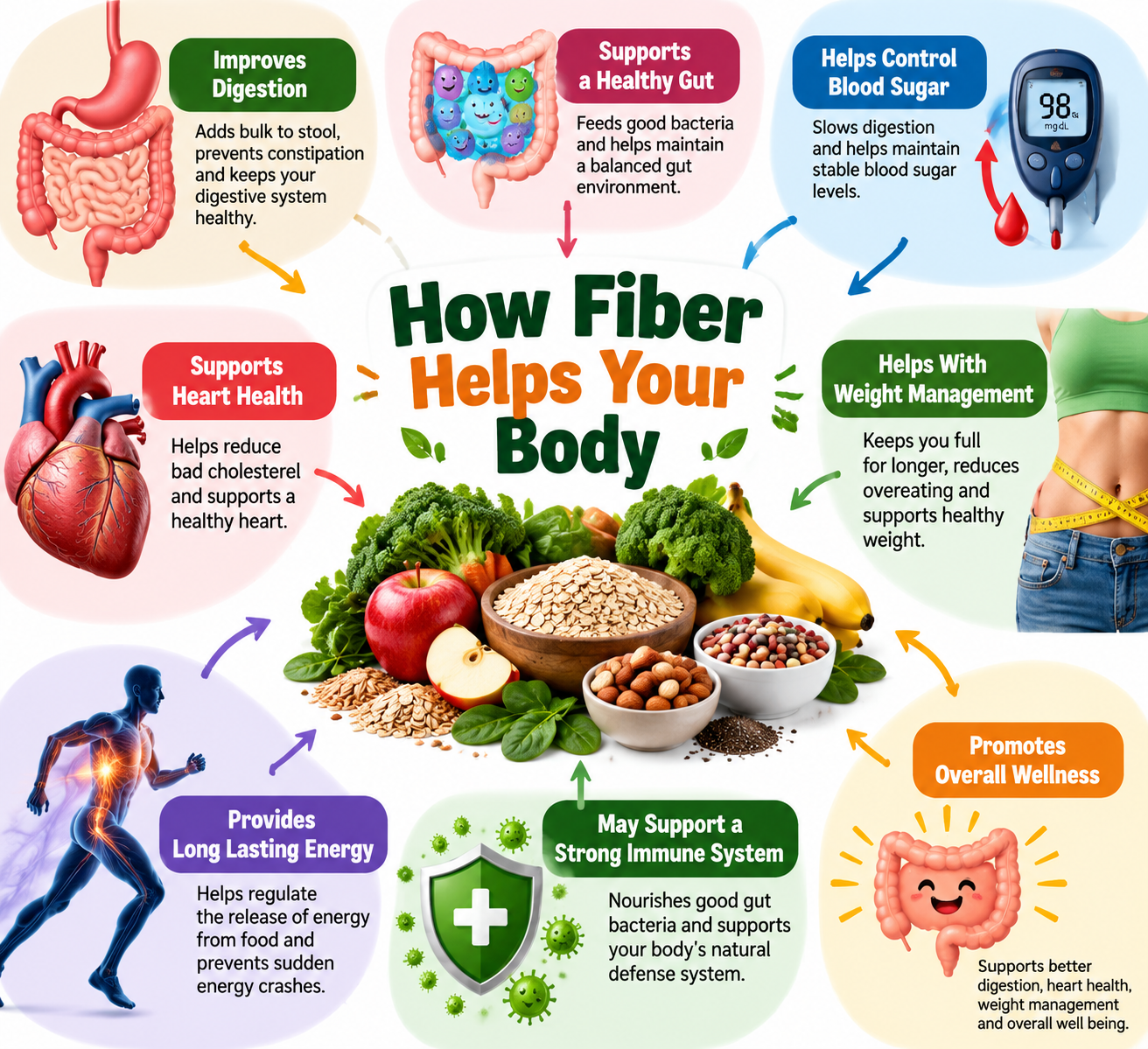
Fiber is one of the most important nutrients that our body needs for maintaining good health. Although fiber is a type of carbohydrate, it works differently from other carbohydrates because the body does not fully digest it. Instead, fiber passes through the digestive system and supports many important body functions. A diet rich in fiber can improve digestion, support heart health, help maintain a healthy weight, and keep blood sugar levels balanced.
Many people do not consume enough fiber in their daily meals because modern diets often contain more processed foods and fewer natural foods like fruits, vegetables, whole grains, nuts, and seeds. Understanding how fiber helps your body can encourage better food choices and create healthier eating habits.
Fiber is naturally found in plant based foods. Foods such as apples, bananas, carrots, spinach, oats, beans, lentils, almonds, chia seeds, and whole grains are excellent sources of dietary fiber. Adding these foods to your daily routine can provide long term benefits for your overall health.
What Is Dietary Fiber?
Dietary fiber is the part of plant foods that your body cannot completely break down during digestion. Unlike sugars and starches, fiber moves through the digestive tract mostly unchanged. This unique property allows fiber to support several important processes inside the body.
There are two main types of fiber: soluble fiber and insoluble fiber. Both types play different roles, but both are important for maintaining a healthy body.
Soluble fiber dissolves in water and forms a gel like substance in the digestive system. It can help control blood cholesterol levels and support stable blood sugar. Foods rich in soluble fiber include oats, beans, lentils, apples, and citrus fruits.
Insoluble fiber does not dissolve in water. It adds bulk to stool and helps food move smoothly through the digestive system. Vegetables, whole grains, and nuts are good sources of insoluble fiber.
A balanced diet should include both soluble and insoluble fiber because each type provides different health benefits.
Fiber Improves Digestion Naturally
One of the most well known benefits of fiber is its ability to support healthy digestion. A fiber rich diet helps keep the digestive system working properly by improving bowel movement and preventing common digestive problems.
When you eat enough fiber, it absorbs water and increases stool volume. This makes stool softer and easier to pass, reducing the chances of constipation. People who experience irregular bowel movements often benefit from increasing their intake of fruits, vegetables, and whole grains.
Fiber also supports the natural movement of the intestines. This helps waste travel through the digestive tract more efficiently. A healthy digestive system allows the body to remove waste properly and maintain comfort after meals.
However, increasing fiber intake should be done gradually. Suddenly eating a large amount of fiber may cause gas or bloating because the digestive system needs time to adjust. Drinking enough water while increasing fiber intake can help the body handle the change more comfortably.
Fiber Supports a Healthy Gut
Your gut contains millions of beneficial bacteria that play an important role in overall health. These friendly bacteria help with digestion, nutrient absorption, and immune function. Fiber acts as food for these beneficial bacteria.
Certain types of fiber are known as prebiotic fibers because they help nourish healthy gut bacteria. When these bacteria consume fiber, they produce compounds that support the health of the intestinal lining.
A healthy gut environment can improve digestion and may contribute to better overall wellness. Eating different types of high fiber foods can increase the variety of beneficial bacteria in the gut.
Foods such as onions, garlic, bananas, oats, and legumes contain fibers that support gut health. Including these foods regularly can help maintain a balanced digestive system.
Fiber Helps Control Blood Sugar Levels
Fiber can play an important role in maintaining balanced blood sugar levels. High fiber foods are usually digested more slowly than low fiber foods, which helps prevent sudden increases in blood glucose after meals.
Soluble fiber slows digestion and the absorption of sugar into the bloodstream. This can help the body maintain more stable energy levels throughout the day.
For people who want to manage their blood sugar, choosing whole foods that contain fiber is often a better option than consuming highly processed foods with added sugars. Foods like vegetables, beans, lentils, and whole grains provide important nutrients along with fiber.
A balanced diet with enough fiber can support healthy eating habits and help reduce the impact of high sugar meals.
Fiber Supports Heart Health
Eating enough fiber is also linked with better heart health. Soluble fiber can help reduce levels of LDL cholesterol, often called bad cholesterol, in the blood.
High cholesterol can contribute to the buildup of fatty deposits in blood vessels, increasing the risk of heart problems. Fiber helps remove some cholesterol from the body by reducing its absorption in the digestive system.
Foods such as oats, beans, lentils, and fruits are excellent sources of heart friendly fiber. Including these foods regularly as part of a balanced diet can support cardiovascular wellness.
Fiber rich foods are also often naturally low in unhealthy fats and provide important vitamins, minerals, and antioxidants that support overall health.
Fiber Helps With Weight Management
Fiber can be very helpful for people who want to maintain a healthy weight. High fiber foods usually make you feel full for a longer time because they take longer to digest.
When you feel satisfied after eating, you may be less likely to overeat or choose unhealthy snacks between meals. This can make it easier to manage daily calorie intake.
Foods rich in fiber often have fewer calories compared to many processed foods. For example, vegetables, fruits, and legumes provide volume and nutrients without adding excessive calories.
Adding fiber rich foods to meals can support a balanced approach to weight management without relying on extreme diets.
Fiber Provides Long Lasting Energy
Although fiber does not provide energy like sugars and fats, it helps regulate how your body uses energy from food. High fiber meals are digested more slowly, which can help prevent sudden hunger and energy crashes.
Eating a breakfast containing fiber, such as oatmeal with fruits and nuts, can provide steady energy throughout the morning. Similarly, meals containing vegetables, whole grains, and legumes can help maintain energy levels during the day.
A diet that includes enough fiber can support better eating patterns and help you feel active and satisfied.
Fiber May Support a Strong Immune System
A healthy digestive system is closely connected with immune health. Since fiber supports beneficial gut bacteria, it indirectly helps maintain a healthy immune response.
Many immune related activities occur in the digestive tract. A balanced gut environment can help the body respond properly to different challenges.
Eating a variety of fiber rich foods also provides vitamins, minerals, and antioxidants that support the body’s natural defense system.
Best High Fiber Foods to Add to Your Diet
Many delicious and natural foods can help increase your daily fiber intake. Some excellent sources include:
Fruits such as apples, pears, berries, oranges, and bananas provide fiber along with important vitamins.
Vegetables including carrots, broccoli, spinach, sweet potatoes, and green beans are rich in fiber and nutrients.
Legumes such as lentils, beans, and chickpeas are among the best sources of dietary fiber and plant based protein.
Whole grains like oats, brown rice, whole wheat bread, and barley contain more fiber than refined grains.
Nuts and seeds including almonds, chia seeds, flaxseeds, and sunflower seeds provide fiber and healthy fats.
Adding a variety of these foods to your meals can make it easier to meet your daily fiber needs.
How Much Fiber Does Your Body Need?
The amount of fiber a person needs depends on age, gender, and overall health. In general, adults should aim to consume around 25 to 38 grams of fiber daily.
Many people consume much less than this amount because their diets contain fewer plant based foods. Increasing fiber intake slowly and consistently is the best approach.
Simple changes can make a big difference. Choosing whole grain bread instead of white bread, adding vegetables to meals, eating fruits as snacks, and including beans or lentils in meals are easy ways to increase fiber consumption.
Common Mistakes When Increasing Fiber Intake
While fiber provides many health benefits, some people experience discomfort when they increase fiber too quickly. Eating large amounts of fiber suddenly may lead to gas, bloating, or stomach discomfort.
To avoid these problems, increase fiber gradually and drink plenty of water. Your digestive system needs time to adapt to higher fiber intake.
Another common mistake is relying only on fiber supplements instead of eating natural fiber foods. Whole foods provide fiber along with vitamins, minerals, and other beneficial plant compounds.
Final Thoughts
Fiber is an essential part of a healthy diet and plays a powerful role in supporting the body. From improving digestion and supporting gut health to helping control blood sugar, managing weight, and protecting heart health, fiber provides many important benefits.
The best way to increase fiber intake is by eating a variety of natural plant based foods such as fruits, vegetables, whole grains, legumes, nuts, and seeds. Small daily changes can create long term improvements in health and wellbeing.
A fiber rich lifestyle is not about following a complicated diet. It is about making simple choices that nourish your body every day. By understanding how fiber helps your body, you can make better food decisions and build healthier habits for the future.