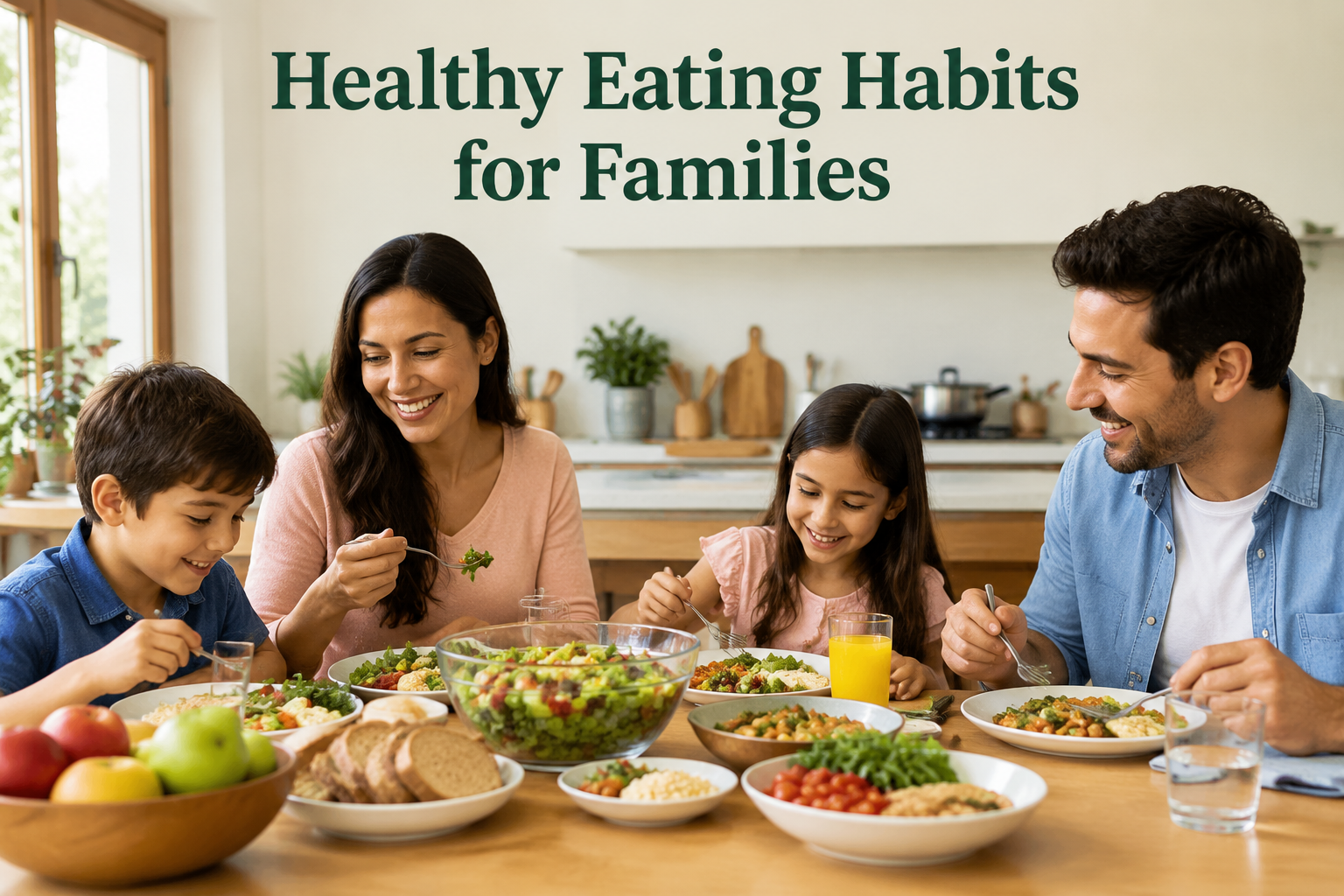
Healthy eating habits for families are one of the most important foundations for a happy and active life. The food choices we make at home affect our energy, growth, immunity, mood, and overall health. When families develop healthy eating habits together, children learn better food choices from an early age, and adults also benefit from a balanced lifestyle. A healthy family does not need expensive foods or complicated meal plans. Small daily changes, such as eating more vegetables, choosing natural foods, drinking enough water, and sharing meals together, can create a positive impact for years.
In today’s busy world, many families struggle to maintain healthy eating routines. Fast food, sugary drinks, processed snacks, and irregular meal timings have become common parts of daily life. However, with proper planning and awareness, families can return to simple and nutritious eating habits. Healthy eating is not about strict diets or avoiding all favorite foods. It is about creating balance and making smarter choices that support the body’s needs.
Understanding the Importance of Healthy Eating for Families
A family’s eating habits influence every member, especially children. Kids usually learn by watching their parents and other family members. If they see vegetables, fruits, whole grains, and healthy proteins included in daily meals, they are more likely to develop similar preferences.
Healthy eating provides essential nutrients that help children grow properly and support adults in maintaining strength and energy. A balanced diet contains important nutrients such as vitamins, minerals, protein, healthy fats, and carbohydrates. These nutrients help the body perform daily activities, improve concentration, strengthen the immune system, and maintain a healthy weight.
Families who follow healthy eating habits often experience better energy levels and fewer health problems. A nutritious diet can support heart health, digestion, brain function, and overall wellness. Developing these habits early creates a strong foundation for a healthier future.
Start the Day with a Healthy Breakfast
Breakfast is one of the most important meals of the day. After a long night without food, the body needs energy to start daily activities. A healthy breakfast helps improve focus, concentration, and performance at school and work.
Families can choose simple breakfast options such as eggs, oats, yogurt, fruits, whole grain bread, or homemade smoothies. Adding protein and fiber to breakfast helps keep the body full for longer and reduces the desire for unhealthy snacks.
Skipping breakfast can lead to low energy and poor food choices later in the day. Making breakfast a family routine encourages everyone to begin the day with positive eating habits.
Include More Fruits and Vegetables in Daily Meals
Fruits and vegetables are important parts of a healthy family diet. They provide vitamins, minerals, antioxidants, and fiber that support the body in many ways. Eating different colors of fruits and vegetables ensures that the family receives a variety of nutrients.
For example, carrots contain nutrients that support eye health, leafy green vegetables provide important minerals, and citrus fruits offer vitamin C that helps support immunity. Apples, bananas, berries, cucumbers, tomatoes, and spinach are easy options that can be added to daily meals.
Parents can encourage children to eat more vegetables by making meals colorful and involving them in food preparation. When children participate in choosing and preparing healthy foods, they often become more interested in eating them.
Choose Homemade Meals More Often
Cooking homemade meals is one of the best healthy eating habits for families. Homemade food allows better control over ingredients, portion sizes, and cooking methods. Families can reduce the amount of salt, sugar, and unhealthy fats commonly found in processed foods.
Traditional homemade meals often provide better nutrition because they include fresh ingredients. Simple dishes made with vegetables, beans, lentils, lean meats, whole grains, and healthy oils can provide complete nourishment.
Cooking together can also become a valuable family activity. Parents can teach children about nutrition, cooking skills, and the importance of choosing healthy ingredients.
Reduce Processed Foods and Sugary Drinks
Processed foods are often convenient, but many contain high amounts of sugar, unhealthy fats, and artificial ingredients. Regular consumption of these foods may contribute to weight gain and other health concerns.
Families should try to limit foods such as sugary snacks, soft drinks, packaged chips, and fast food meals. This does not mean these foods must be completely removed. They can be enjoyed occasionally while focusing on healthier choices most of the time.
Replacing sugary drinks with water, milk, or natural fruit drinks is a simple way to improve family nutrition. Drinking enough water is essential for digestion, energy, and proper body function.
Create a Balanced Plate
A balanced plate helps families understand how to include different food groups in each meal. A healthy meal should contain a combination of vegetables, protein, whole grains, and healthy fats.
Vegetables should make up a good portion of the plate because they provide essential nutrients and fiber. Protein sources such as eggs, fish, chicken, beans, lentils, and yogurt help build and repair body tissues. Whole grains such as brown rice, oats, and whole wheat bread provide lasting energy.
Healthy fats from nuts, seeds, olive oil, and certain fish support brain and heart health. Creating balanced meals does not have to be difficult. Simple combinations can provide excellent nutrition.
Teach Children Healthy Food Choices
Children develop eating habits from their surroundings. Parents play an important role in teaching children how to make healthy food choices. Instead of forcing children to eat certain foods, parents can introduce healthy options regularly and allow children to explore different flavors.
Teaching children about nutrition helps them understand why certain foods are good for their bodies. They can learn that fruits provide vitamins, vegetables support growth, and proteins help build strength.
It is also important to create a positive relationship with food. Food should not be used only as a reward or punishment. Children should learn that healthy eating is a normal and enjoyable part of life.
Eat Meals Together as a Family
Family meals provide more than just nutrition. They create opportunities for communication, connection, and emotional support. Families who eat together regularly often develop stronger relationships and better eating habits.
During family meals, children can observe healthy behaviors and learn table manners. Eating together also encourages slower eating, which helps the body recognize fullness and prevents overeating.
Even with busy schedules, families can try to share at least one meal together each day. This simple habit can improve both physical and emotional well being.
Practice Portion Control
Healthy eating is not only about what foods families choose but also about how much they eat. Portion control helps prevent overeating and supports a healthy weight.
Using smaller plates, eating slowly, and paying attention to hunger signals can help manage portions naturally. Children and adults should learn to eat until they feel satisfied rather than overly full.
Every person has different nutritional needs based on age, activity level, and lifestyle. A balanced approach is more important than following strict rules.
Plan Healthy Meals in Advance
Meal planning makes healthy eating easier for busy families. When meals are planned ahead, families are less likely to depend on unhealthy convenience foods.
Creating a weekly meal plan can save time, reduce food waste, and make grocery shopping easier. Families can prepare ingredients in advance, such as washing vegetables, cooking beans, or preparing healthy snacks.
Keeping nutritious foods available at home encourages better choices. When fruits, nuts, yogurt, and homemade snacks are easily accessible, family members are more likely to choose them.
Encourage Physical Activity Along with Healthy Eating
Healthy eating habits work best when combined with regular physical activity. Exercise helps maintain a healthy body, improves mood, and supports strong muscles and bones.
Families can enjoy activities together, such as walking, cycling, playing outdoor games, or exercising at home. Making movement a family routine creates healthy habits that children can continue throughout life.
A healthy lifestyle is a combination of nutritious food, regular activity, good sleep, and positive habits.
Be a Positive Role Model
Parents and adults influence children’s choices through their own behavior. If adults practice healthy eating habits, children are more likely to follow the same lifestyle.
Instead of focusing on perfection, families should focus on consistency. Small improvements every day can create long term benefits. Choosing water instead of soda, adding vegetables to meals, and preparing homemade food more often are simple steps that make a difference.
Healthy eating should be enjoyable and realistic. Families should celebrate progress and continue learning about better food choices together.
Conclusion
Healthy eating habits for families are the key to building a strong and healthy lifestyle. Nutritious food choices provide energy, support growth, improve immunity, and protect overall health. By eating balanced meals, including more fruits and vegetables, choosing homemade foods, limiting processed items, and sharing meals together, families can create positive changes.
A healthy lifestyle does not require perfection. It requires small, consistent efforts that become daily routines. When families work together to develop better eating habits, they create a healthier environment where everyone can grow, learn, and enjoy life with more energy and confidence. Healthy eating is not just about food; it is about building a better future for the entire family.