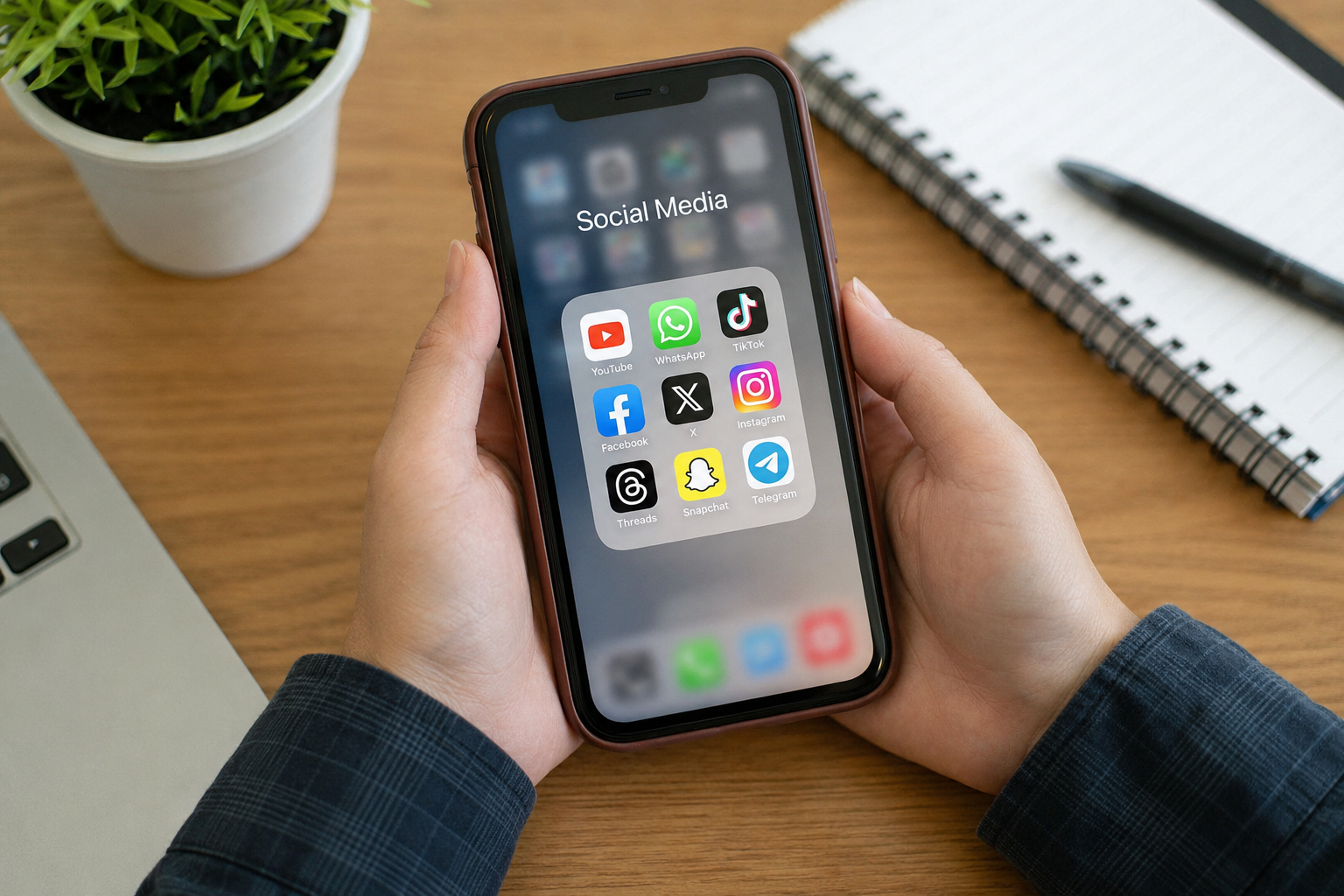
Social media has become an important part of everyday life. People use platforms such as Facebook, Instagram, TikTok, YouTube, X, and other online communities to communicate, share experiences, follow news, watch entertainment, and learn new things. Social media can make communication easier and help people stay connected with friends and family. However, spending too much time online or using social media in an unhealthy way can also affect mental wellbeing.
The connection between social media and mental health is becoming an important topic because millions of people spend several hours each day looking at online content. The effect of social media is not always negative or positive. It depends on how people use it, what type of content they see, how often they use it, and how they feel while using it. Understanding these effects can help people build healthier social media habits and protect their mental wellbeing.
Social Media and Mental Wellbeing
Mental wellbeing refers to a person’s emotional, psychological, and social health. It affects how people think, feel, handle daily challenges, and interact with others. Social media can influence all of these areas.
One major benefit of social media is that it helps people stay connected. Someone who lives far away from family members can communicate through messages, video calls, photos, and online groups. People can also find communities based on their interests, hobbies, education, or life experiences. For some individuals, these connections can reduce feelings of loneliness and provide emotional support.
At the same time, social media can become stressful when people feel pressure to stay active, respond quickly, gain attention, or maintain a perfect online image. Constant online activity can make it difficult for the mind to relax.
Social Comparison on Social Media
One of the biggest ways social media can affect mental wellbeing is through social comparison. People often compare their lives with the lives they see online. The problem is that social media usually shows selected moments rather than complete reality.
Someone may see pictures of expensive holidays, successful careers, attractive homes, celebrations, or happy relationships. These posts can create the impression that other people have better and easier lives. In reality, most people also experience problems, stress, disappointment, and personal struggles that they do not post online.
Constant comparison can affect self confidence and create feelings of inadequacy. A person may start thinking that they are not successful enough, attractive enough, wealthy enough, or interesting enough. Over time, these thoughts can have a negative effect on emotional wellbeing.
Social Media and Anxiety
Heavy social media use may also contribute to feelings of anxiety. Notifications, messages, comments, and constant updates can create a sense that a person always needs to be available.
Some people worry about missing important posts or conversations. This is sometimes described as the fear of missing out. When people continuously check their phones because they are afraid of missing something, social media can become a source of stress.
Negative comments and online arguments can also increase anxiety. Reading upsetting news or seeing conflicts repeatedly may make people feel overwhelmed. Taking regular breaks from social media can help reduce this pressure.
The Effect on Self Esteem
Self esteem is another area that can be influenced by social media. Many platforms focus heavily on appearance, popularity, followers, likes, and comments. When people begin to measure their value through online reactions, their confidence can become dependent on other people’s opinions.
For example, someone may share a photograph and receive fewer likes than expected. They might begin to believe that the photograph is not good enough or that people do not appreciate them. Although online engagement does not determine a person’s real value, it can sometimes feel that way.
Following realistic and positive accounts can help create a healthier online environment. People can also remind themselves that social media posts do not represent the complete lives of the people who create them.
Social Media and Sleep
Social media can affect mental wellbeing indirectly by influencing sleep. Many people use their phones late at night and continue scrolling when they should be preparing for sleep.
Late night social media use can keep the mind active and make it harder to relax. Notifications may also interrupt sleep. Poor sleep can affect mood, concentration, energy, and the ability to manage stress.
Creating a simple bedtime routine can help. Putting the phone away before sleeping, turning off unnecessary notifications, and avoiding long periods of scrolling at night may support better sleep habits.
Positive Effects of Social Media
It is important to remember that social media is not always harmful. It can provide many positive experiences when used wisely.
Social media can help people maintain friendships and family relationships. It can also provide educational information, motivational content, creative ideas, and opportunities to discover new interests. Students can use online communities to discuss academic subjects, while professionals can connect with people in their industries.
Social media can also help people find emotional support. Online communities can make individuals feel less alone because they allow people to communicate with others who have similar interests or experiences.
For many users, social media is also a source of entertainment and creativity. Watching funny videos, listening to music, sharing artwork, or learning a new skill can be enjoyable and mentally refreshing when done in moderation.
Negative Content and Mental Health
The type of content a person consumes matters greatly. Social media platforms contain useful and entertaining material, but they also contain criticism, misinformation, disturbing images, arguments, and negative news.
Repeated exposure to negative content can affect mood and increase feelings of stress. People may begin to feel that the world is constantly filled with problems. This can make it difficult to maintain a balanced perspective.
Users can improve their online experience by unfollowing accounts that consistently create stress or negative emotions. Choosing educational, positive, useful, and inspiring content can make social media a healthier part of daily life.
How to Build Healthy Social Media Habits
Healthy social media habits do not necessarily mean completely avoiding social media. Instead, the goal is to use it in a balanced way.
One useful habit is setting specific times for checking social media. Instead of opening an app every few minutes, people can choose certain periods during the day for online activity.
Another helpful habit is taking regular breaks. Spending time outside, exercising, reading, talking with family, or enjoying hobbies without a phone can give the mind a chance to rest.
It is also important to notice how social media makes you feel. If scrolling leaves you feeling unhappy, anxious, jealous, or exhausted, it may be useful to reduce your usage or change the type of content you follow.
Turning off unnecessary notifications can also reduce distractions. People should remember that they do not need to respond to every message immediately.
Social Media and Real Life Balance
A healthy relationship with social media means maintaining a balance between online and offline life. Real world relationships, physical activity, hobbies, education, work, and personal time are all important for mental wellbeing.
Social media should support life rather than replace it. Spending time with people in person can provide emotional connection that online interactions may not always provide. Simple activities such as walking, having a conversation, eating a meal with family, or enjoying a hobby can improve everyday wellbeing.
Final Thoughts
Social media can have both positive and negative effects on mental wellbeing. It can help people communicate, build communities, find information, and enjoy entertainment. However, excessive use, social comparison, negative content, online pressure, and poor sleep habits can create emotional and psychological challenges.
The key is not necessarily to stop using social media but to use it more consciously. Setting healthy boundaries, taking regular breaks, choosing positive content, protecting sleep, and focusing on real world relationships can help create a healthier relationship with social media.
As social media continues to become part of everyday life, understanding its effect on mental wellbeing is increasingly important. By paying attention to how online activities affect mood and behavior, people can make better choices and use social media in a way that supports a healthier and more balanced lifestyle.