Artificial intelligence is changing healthcare in many important ways. From helping doctors identify diseases to improving patient care, AI is becoming an important part of modern medicine. Healthcare systems around the world are using artificial intelligence to analyze medical information, support doctors, improve hospital operations, and develop better treatments. As technology continues to improve, the role of AI in healthcare is expected to become even more important.
Artificial intelligence in healthcare does not mean replacing doctors or nurses. Instead, it can help medical professionals make better decisions by providing useful information quickly. AI systems can process large amounts of medical data that would take humans much longer to review. This can save time, improve accuracy, and support better healthcare outcomes.
What Is Artificial Intelligence in Healthcare?
Artificial intelligence in healthcare refers to the use of computer systems and advanced algorithms to perform tasks that normally require human intelligence. These tasks can include analyzing medical images, recognizing patterns, predicting health risks, organizing patient information, and supporting clinical decisions.
Machine learning is one of the most common technologies used in healthcare AI. It allows computer systems to learn from large amounts of information and identify patterns. Another important technology is natural language processing, which helps computers understand and process human language. These technologies are being used in hospitals, clinics, laboratories, pharmacies, and medical research.
AI Is Improving Disease Detection
One of the most important benefits of artificial intelligence in healthcare is its ability to support early disease detection. Many diseases are easier to treat when they are discovered at an early stage. AI tools can examine medical images and patient information to help identify possible signs of illness.
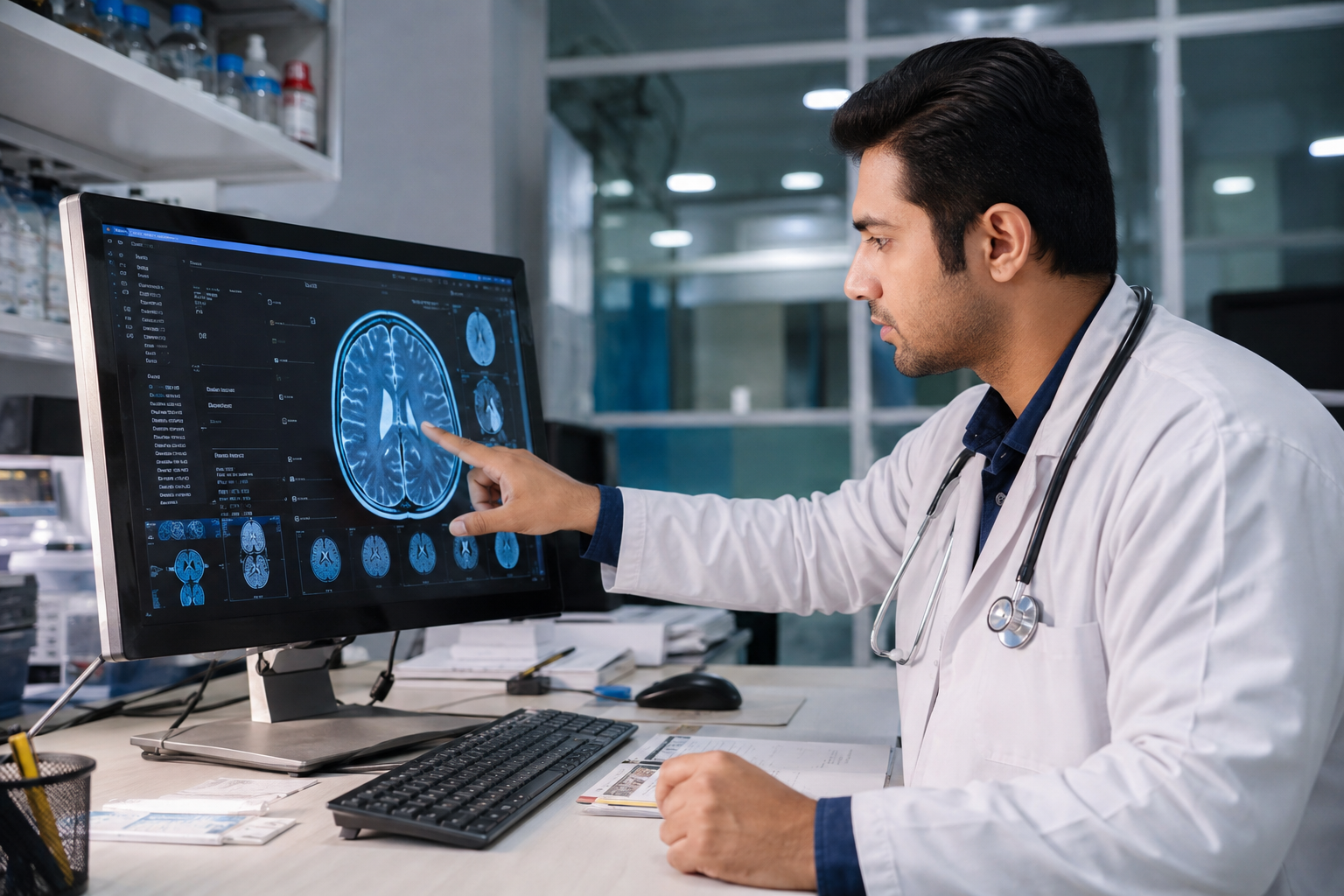
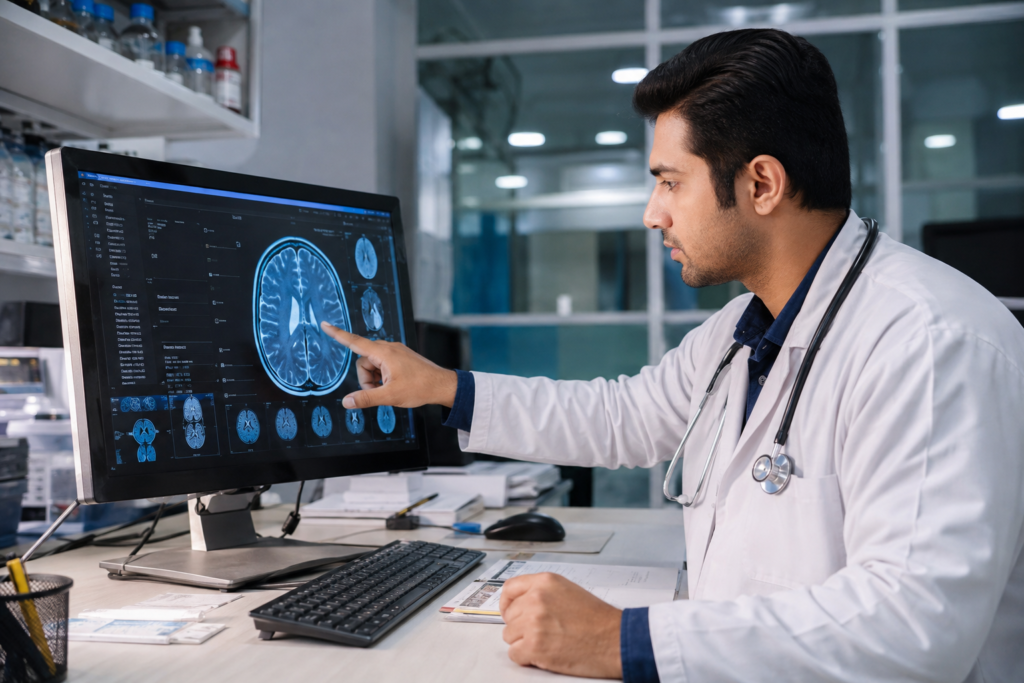
For example, AI can assist doctors when examining X rays, CT scans, MRI images, and other medical images. It can identify patterns that may be difficult to notice quickly. This does not mean that AI should make medical decisions on its own. Doctors still need to review the results and consider the complete medical history of the patient.
AI is also being studied and used to support the detection of conditions such as cancer, heart disease, eye diseases, and neurological disorders. By helping medical professionals recognize possible problems earlier, artificial intelligence may contribute to faster diagnosis and treatment.
Artificial Intelligence and Personalized Healthcare
Every patient is different, and treatment that works well for one person may not work in exactly the same way for another. Artificial intelligence can help move healthcare toward more personalized treatment.
AI systems can analyze information such as medical history, laboratory results, lifestyle information, and treatment responses. This information can help doctors understand patterns and consider which treatment options may be appropriate for an individual patient.
Personalized healthcare can be especially valuable in areas such as cancer treatment. Researchers are using AI to study large amounts of biological and medical information in an effort to understand how different patients may respond to specific treatments.
AI Is Helping Doctors Make Decisions
Doctors often have to make decisions using a large amount of information. Medical records can contain years of test results, prescriptions, diagnoses, reports, and other information. Reviewing all of this information can be challenging.
Artificial intelligence can help organize and analyze medical information so doctors can find important details more efficiently. AI based decision support systems can highlight patterns, possible risks, or information that may deserve additional attention.
The purpose of these systems is to support healthcare professionals rather than replace them. Human experience, medical judgment, communication, and understanding of individual patient circumstances remain extremely important.
AI in Medical Research
Medical research is another area where artificial intelligence is creating major opportunities. Developing new medicines and treatments can take many years and requires researchers to study large amounts of information.
AI can help researchers analyze scientific data, identify possible relationships, and explore potential drug candidates. It can also help researchers understand diseases and discover new areas for investigation.
Drug development is particularly complex because researchers need to examine many possible compounds and determine which ones may be useful. AI can help reduce the amount of time needed to analyze certain types of data. This could support faster research and potentially help bring new treatments to patients more efficiently.
Improving Patient Monitoring
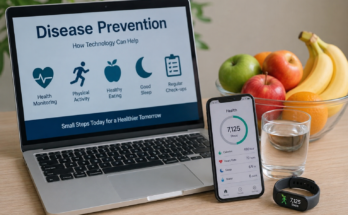
Artificial intelligence is also changing the way patients can be monitored. Wearable devices and digital health tools can collect information such as heart rate, activity levels, sleep patterns, and other health related measurements.
AI can analyze this information and identify unusual changes or patterns. In some situations, this may help healthcare professionals recognize that a patient needs additional attention.
Remote patient monitoring can also be useful for people who need regular observation but do not always need to stay in a hospital. By combining connected devices with AI systems, healthcare providers may be able to monitor certain health information from a distance.
AI and Hospital Management
Artificial intelligence is not only being used for medical diagnosis and treatment. It can also improve hospital management.
Hospitals deal with many daily challenges, including appointment scheduling, patient admissions, staffing, medical supplies, and bed availability. AI systems can analyze operational information and help organizations identify ways to use resources more efficiently.
For example, predictive technology may help hospitals estimate patient demand and plan staffing levels. Better planning can reduce unnecessary delays and improve the overall patient experience.
Virtual Health Assistants
AI powered virtual assistants are becoming more common in healthcare. These tools can help patients find general health information, schedule appointments, receive reminders, and understand basic instructions.
Virtual assistants can be useful because they can provide information at any time. However, they should not be treated as a replacement for professional medical advice. Serious symptoms and medical concerns should always be discussed with a qualified healthcare professional.
Artificial Intelligence and Healthcare Costs
Healthcare can be expensive, and medical organizations are constantly looking for ways to improve efficiency. Artificial intelligence may help reduce some costs by automating repetitive administrative tasks and improving the use of healthcare resources.
When routine tasks are automated, healthcare workers may have more time to focus on patients. AI can also help reduce certain types of administrative work, such as organizing information and processing documents.
However, implementing AI systems also requires investment in technology, staff training, security, and maintenance. Healthcare organizations need to carefully evaluate whether an AI system provides meaningful value.
Privacy and Security Challenges
Although AI offers many benefits, it also creates important challenges. Healthcare information is highly sensitive, so protecting patient privacy is extremely important.
AI systems often require large amounts of data for training and analysis. Healthcare organizations must make sure that patient information is handled responsibly and securely. Strong data protection practices are necessary to reduce the risk of unauthorized access or misuse.
Another concern is accuracy. AI systems can sometimes produce incorrect results. If the data used to train an AI system is incomplete or biased, the system may also produce unreliable outcomes.
For this reason, AI in healthcare needs careful testing, monitoring, and human oversight.
The Future of Artificial Intelligence in Healthcare
The future of artificial intelligence in healthcare looks promising. As technology develops, AI systems may become better at supporting diagnosis, treatment planning, medical research, patient monitoring, and healthcare administration.
The most successful approach will likely involve cooperation between technology and healthcare professionals. Doctors, nurses, researchers, and other medical workers bring experience and human understanding that technology cannot completely replace.
AI can process information quickly, but healthcare is also about communication, compassion, trust, and understanding the individual needs of patients. These human qualities will remain essential.
Conclusion
Artificial intelligence is changing healthcare by helping doctors analyze information, supporting early disease detection, improving personalized treatment, assisting medical research, monitoring patients, and making hospital operations more efficient. The technology has the potential to make healthcare faster, more accurate, and more accessible.
At the same time, artificial intelligence must be used responsibly. Patient privacy, data security, accuracy, fairness, and human oversight are essential for building trust in AI based healthcare.
As artificial intelligence continues to develop, its role in medicine will likely grow. The goal should not be to replace healthcare professionals but to give them better tools to care for patients. When technology and human expertise work together, artificial intelligence can become a powerful tool for improving healthcare and creating better outcomes for people around the world.