Medical research is changing faster than ever before. Scientists, doctors, researchers, and technology experts are working together to discover new ways to prevent diseases, diagnose health problems earlier, develop better treatments, and improve patient care. The latest medical research is especially exciting because it combines biology with artificial intelligence, gene editing, personalized medicine, advanced cancer treatments, and laboratory grown human tissues.
Many of these discoveries are still being tested, so they are not yet available to every patient. However, they could have a major impact on the future of healthcare. From AI powered medical diagnosis to personalized cancer vaccines and gene therapy, modern medical research is moving healthcare toward treatments that are more precise, faster, and designed around individual patients.
Artificial Intelligence in Medical Diagnosis
Artificial intelligence is becoming one of the most important areas of medical research. AI systems can examine huge amounts of medical information and identify patterns that may be difficult for humans to notice. Researchers are studying how AI can help doctors analyze medical images, laboratory results, genetic information, and patient records.
Recent developments show that AI can help identify rare diseases and support doctors when patients have unusual symptoms. AI based tools are also being studied for medical imaging and heart disease detection. However, researchers continue to emphasize that AI should support doctors rather than replace human medical judgment.
The future could involve AI systems that help doctors detect diseases earlier, suggest possible diagnoses, and organize complex patient information. This could save time and potentially improve treatment decisions.
AI Could Make Drug Development Faster
Developing a new medicine traditionally takes many years and requires extensive research and testing. Artificial intelligence could make parts of this process faster by helping researchers identify promising drug targets and molecules.
Modern AI systems can analyze biological data, predict how molecules may interact with proteins, and help researchers identify potential treatments. Research published in 2026 describes AI applications across target identification, molecular screening, drug design, toxicity prediction, and clinical monitoring.
AI is also being used in clinical trials. A recent study reported that AI tools can help with patient recruitment, data monitoring, and trial operations, with potential reductions in development timelines and operational costs.
If these methods continue to prove reliable, future medicines could reach patients more efficiently.
Gene Editing Could Treat Genetic Diseases
Gene editing is another major area of medical research. Technologies such as CRISPR allow scientists to make targeted changes to DNA. Instead of only treating symptoms, gene editing aims to address the underlying genetic cause of certain diseases.
Researchers are continuing to study CRISPR based treatments for inherited conditions, blood disorders, and other serious diseases. The growing number of clinical trials shows how gene editing is moving from laboratory research toward real medical applications.
The potential is enormous because some genetic diseases have limited treatment options. A successful gene editing treatment could potentially provide long lasting benefits after a single intervention.
At the same time, gene editing requires careful safety testing. Researchers must understand possible side effects, unintended genetic changes, long term outcomes, and ethical concerns before these treatments can become widely available.
Personalized Cancer Vaccines
Cancer research is also experiencing major changes. One promising area is personalized cancer vaccines, particularly vaccines based on mRNA technology.
Unlike traditional vaccines that are designed to prevent infections, personalized cancer vaccines are being developed to help the immune system recognize specific features of a patient’s tumor. Researchers analyze a patient’s cancer and attempt to create a treatment that targets the unique characteristics of that cancer.
Recent research has reported encouraging results for mRNA based cancer vaccines, including lasting benefits in melanoma and early promise in other difficult cancers.
Cancer researchers are also focusing more strongly on early detection, prevention, personalized treatment, and immunotherapy.
If larger clinical trials confirm these results, cancer treatment could become much more personalized in the future.
New Immune Cell Treatments for Cancer
Another exciting development involves genetically engineered immune cells. Treatments such as CAR T cell therapy have already changed the treatment of some blood cancers.
Researchers are now working on making these therapies faster, more affordable, and available to more patients. One recent research effort in Australia is developing an off the shelf immune cell therapy using donated umbilical cord blood for acute myeloid leukemia. A phase one clinical trial is planned to evaluate the treatment in patients with limited options.
The advantage of an off the shelf approach could be speed. Some personalized cell therapies require cells to be collected from an individual patient and modified before being returned to the body. A ready made therapy could potentially reduce waiting time.
Lab Grown Organs Could Improve Drug Testing
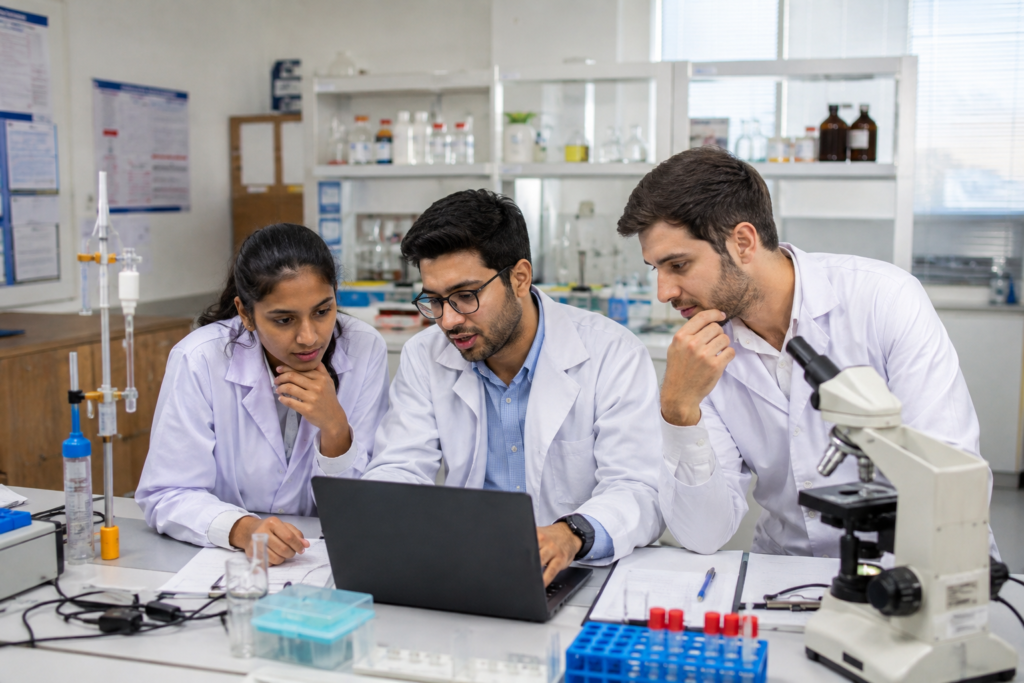
Scientists are also developing miniature human organs called organoids. These are created from human cells and can reproduce some features of real organs.
Researchers are increasingly interested in organoids because animal models do not always predict how a medicine will behave in humans. New research programs are using patient derived organoids to study diseases and test medicines, with projects focused on conditions including inflammatory bowel disease, cancer, and neurological disorders.
This could eventually make drug testing more personalized. Scientists may be able to grow cells from a particular patient, test different treatments on those cells, and identify which option appears most effective.
Organoids could also reduce dependence on animal testing while giving researchers a more human relevant model for studying disease.
Precision Medicine Is Becoming More Important
Precision medicine focuses on choosing treatments according to the individual characteristics of a patient. These characteristics can include genetics, lifestyle, environment, disease biology, and other health information.
Cancer has become one of the leading areas for precision medicine because tumors can have very different genetic profiles. A treatment that works well for one patient may not work for another patient with a similar type of cancer.
Researchers are developing better methods for combining genomic information with clinical data. This could help doctors choose treatments more accurately and reduce unnecessary side effects.
In the future, patients may receive treatment plans based not only on the name of their disease but also on the specific biological features driving that disease.
Early Cancer Detection Could Save More Lives
Another important area of medical research is early disease detection. Cancer is often easier to treat when it is discovered before it spreads, so researchers are developing better screening methods.
Liquid biopsy is one technology being investigated because it may allow doctors to detect cancer related signals through blood samples. Researchers are also combining imaging, genetic information, and AI to improve cancer detection and treatment decisions.
Scientists are even studying vaccines designed to prevent certain cancers before they fully develop. Recent trials are investigating vaccines for people with Lynch syndrome, a genetic condition that increases the risk of colorectal cancer.
These approaches could eventually move cancer care from treating established disease toward preventing disease from developing.
The Future of Healthcare Could Be More Predictive
Traditional healthcare often focuses on treating people after they become sick. New medical research is creating opportunities for more predictive healthcare.
Wearable devices, health sensors, genetic testing, AI systems, and advanced laboratory tests can provide information about health before serious symptoms appear. Researchers are exploring how this information can be combined to identify risks earlier.
For example, a future healthcare system could monitor changes in a person’s heart activity, blood measurements, medical history, and genetic risk. An AI system could then alert a doctor when the data suggests that further testing may be necessary.
This approach could encourage earlier intervention and potentially prevent some serious health problems.
Challenges Still Need to Be Solved
Although the latest medical research is promising, scientific breakthroughs do not automatically become successful healthcare treatments.
New medicines and technologies must pass rigorous clinical testing. Researchers need to prove that treatments are safe and effective in real patients. Healthcare systems must also consider cost, regulation, privacy, accessibility, and training.
AI presents additional challenges. Medical AI systems need high quality data, careful testing, transparency, and appropriate human oversight. Recent research has highlighted concerns about whether systems tested in laboratories and retrospective datasets will perform reliably in real clinical environments.
Access is another major issue. Advanced gene therapies and personalized treatments can be expensive and difficult to deliver. Medical breakthroughs will have the greatest impact when healthcare systems can make them available to patients who need them.
Conclusion
The latest medical research is creating exciting possibilities for the future of healthcare. Artificial intelligence could improve diagnosis and drug development. Gene editing could address the causes of inherited diseases. Personalized cancer vaccines and immune cell therapies could change cancer treatment. Organoids could improve drug testing, while precision medicine could help doctors choose treatments based on the unique biology of each patient.
These technologies are still developing, and many require additional clinical research before they become routine medical care. Nevertheless, the direction of healthcare is becoming clear. Medicine is moving toward earlier diagnosis, personalized treatment, intelligent technology, advanced biological therapies, and more precise patient care.
The most important medical breakthroughs of the future may not simply be new medicines. They may be new ways of understanding disease and delivering the right treatment to the right person at the right time. As research continues, these innovations could make healthcare more effective, more personalized, and potentially more accessible to millions of people around the world.