Soup has been a part of human diets for centuries. It is warm, comforting, easy to digest, and can provide many important nutrients when prepared with healthy ingredients. Today, people have two common choices when they want to enjoy soup. They can prepare homemade soup in their kitchen or choose a packaged soup that is ready within minutes. Both options have their own advantages and disadvantages, but understanding the difference between homemade soup and packaged soup can help you make a better decision for your health.
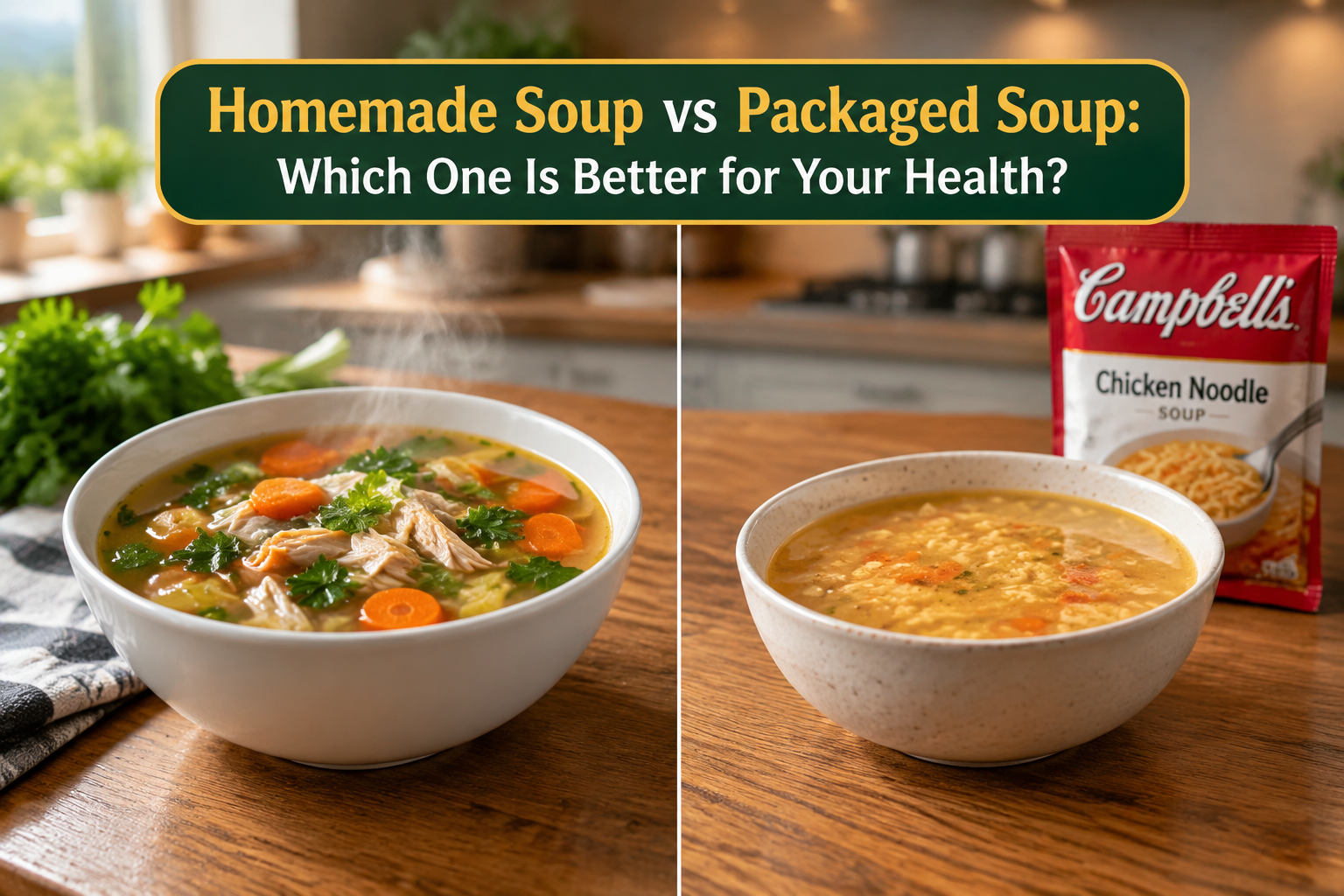
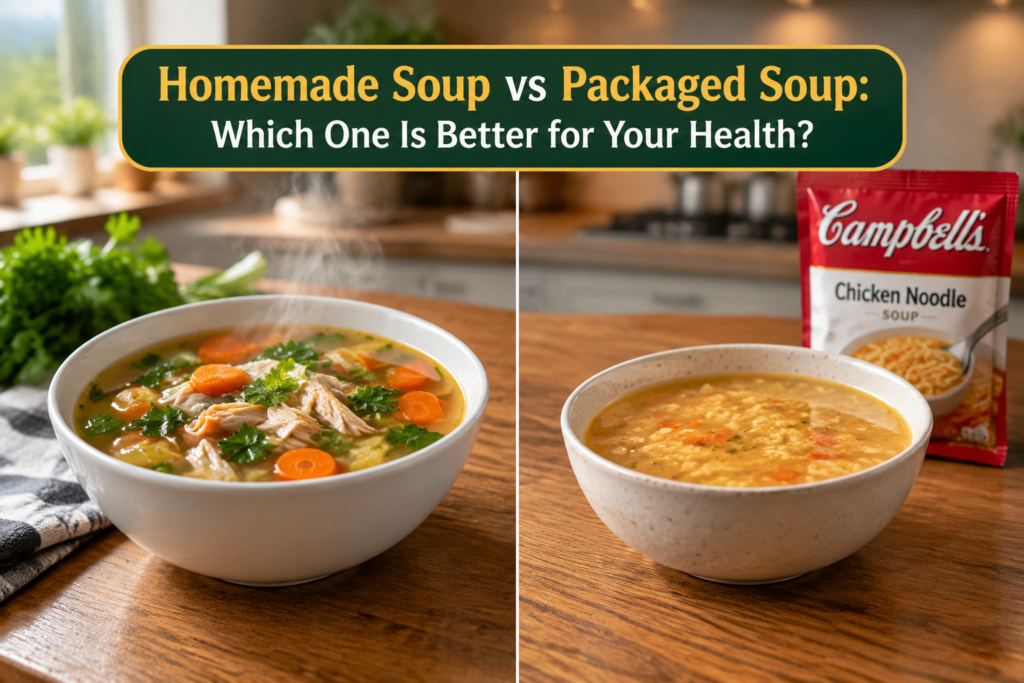
Homemade soup is prepared using fresh ingredients such as vegetables, meat, herbs, spices, and natural broth. Packaged soup, on the other hand, is produced commercially and usually comes in cans, boxes, or instant powder forms. It is designed for convenience and longer shelf life. While packaged soup saves time, homemade soup gives you more control over what goes into your meal.
The main difference between homemade soup and packaged soup is the quality of ingredients. When making soup at home, you can choose fresh vegetables, lean proteins, and natural seasonings. You know exactly what you are adding to your food. This makes homemade soup a healthier option for many people.
For example, a homemade vegetable soup can include carrots, spinach, tomatoes, beans, and other nutrient rich foods. These ingredients provide vitamins, minerals, fiber, and antioxidants that support overall health. You can also adjust the recipe according to your personal needs. If you want more protein, you can add chicken, eggs, lentils, or beans. If you want a low calorie meal, you can reduce oil and avoid unnecessary ingredients.
Packaged soup often contains processed ingredients to improve taste, texture, and storage life. Many ready made soups contain higher amounts of sodium, preservatives, artificial flavors, and added ingredients. Eating too much sodium can be harmful for people who need to manage their blood pressure. Although some packaged soups are made with healthier formulas, it is important to read the nutrition label before buying them.
One major advantage of homemade soup is freshness. Freshly prepared soup contains ingredients that have not been stored for long periods. Fresh vegetables usually maintain better flavor and nutritional value. When you cook at home, you can also avoid unnecessary additives and create a meal that matches your health goals.
Another benefit of homemade soup is customization. Everyone has different nutritional needs and taste preferences. Some people prefer spicy soups, while others enjoy mild flavors. Some want high protein meals, while others prefer plant based options. Homemade soup allows complete control over ingredients and cooking methods.
For families, homemade soup can also be an economical choice. Buying fresh vegetables, grains, and proteins in larger quantities can often cost less than purchasing individual packaged soups regularly. A large pot of homemade soup can provide several servings, making it a budget friendly meal option.
Packaged soup has one major advantage, which is convenience. Modern lifestyles are busy, and many people do not have enough time to prepare meals from scratch every day. Instant soup can be prepared quickly by adding hot water or heating the contents. For students, office workers, and travelers, packaged soup can be an easy solution when time is limited.
Another advantage of packaged soup is its long shelf life. Unlike fresh ingredients, packaged soup can stay available for months. This makes it useful during emergencies, travel, or situations when fresh food is not easily available. Some packaged soups are also designed with balanced nutrients and can be a reasonable option when chosen carefully.
However, convenience does not always mean better nutrition. Many packaged soups are heavily processed. During manufacturing, some nutrients may decrease, and additional ingredients may be added to maintain flavor and appearance. Some instant soups also contain refined carbohydrates and unhealthy fats depending on the product.
When comparing homemade soup vs packaged soup, sodium content is one of the biggest differences. Salt is commonly added to packaged soups to enhance taste and increase preservation. A single serving may contain a significant amount of daily recommended sodium intake. Homemade soup allows you to control the amount of salt and use natural herbs and spices for flavor.
Homemade soup is also better for people who want to lose weight. A bowl of homemade vegetable soup can be filling because vegetables provide fiber and water, which help control hunger. Adding healthy proteins such as chicken or lentils can make the soup more satisfying. Many packaged soups may not provide enough protein or fiber, causing hunger to return quickly.
For people focusing on immunity and overall wellness, homemade soup can be a powerful choice. Ingredients like garlic, ginger, onions, spinach, carrots, and chicken contain nutrients that support the body. A warm homemade soup during cold weather can provide comfort and hydration while delivering essential nutrients.
This does not mean all packaged soups are unhealthy. Many companies now offer healthier versions with reduced sodium, organic ingredients, and better nutritional profiles. Some packaged soups can fit into a balanced diet if they are selected carefully. Checking the ingredient list and nutrition facts can help you choose a better product.
The cooking method also affects the nutritional value of soup. Homemade soup allows you to choose gentle cooking methods that preserve nutrients. Overcooking vegetables can reduce some vitamins, while careful preparation helps maintain their benefits. Packaged soups often go through industrial processing, which may affect some nutrients.
Another important factor is taste. Homemade soup usually has a richer and fresher flavor because it is prepared with natural ingredients. The aroma of freshly cooked vegetables, herbs, and spices creates a satisfying eating experience. Packaged soups may have a consistent taste, but some people find the flavor less natural compared to homemade recipes.
Preparing homemade soup can also become a healthy lifestyle habit. Cooking at home encourages people to understand ingredients and make better food choices. It creates an opportunity for families to spend time together and enjoy nutritious meals.
For busy people, a practical approach is to combine both options. Homemade soup can be prepared in larger quantities and stored for later use. This provides the benefits of homemade nutrition with the convenience of quick meals. Packaged soup can be kept as an occasional backup rather than a daily food choice.
When choosing between homemade soup and packaged soup, your health goals, lifestyle, and available time should be considered. If your priority is maximum nutrition, lower sodium, and complete control over ingredients, homemade soup is usually the better choice. If you need a quick meal option, a carefully selected packaged soup can be useful.
In conclusion, homemade soup and packaged soup both have their place in modern diets. Homemade soup offers freshness, better ingredient control, customization, and higher nutritional value. Packaged soup provides speed, convenience, and a longer storage period. The healthiest choice depends on how often you consume soup and what type of ingredients are included.
Making homemade soup whenever possible is a simple way to improve your diet and enjoy a comforting meal full of natural flavors. However, when life becomes busy, choosing a high quality packaged soup with good ingredients can still be part of a balanced lifestyle. The key is to understand what you are eating and make choices that support your long term health.