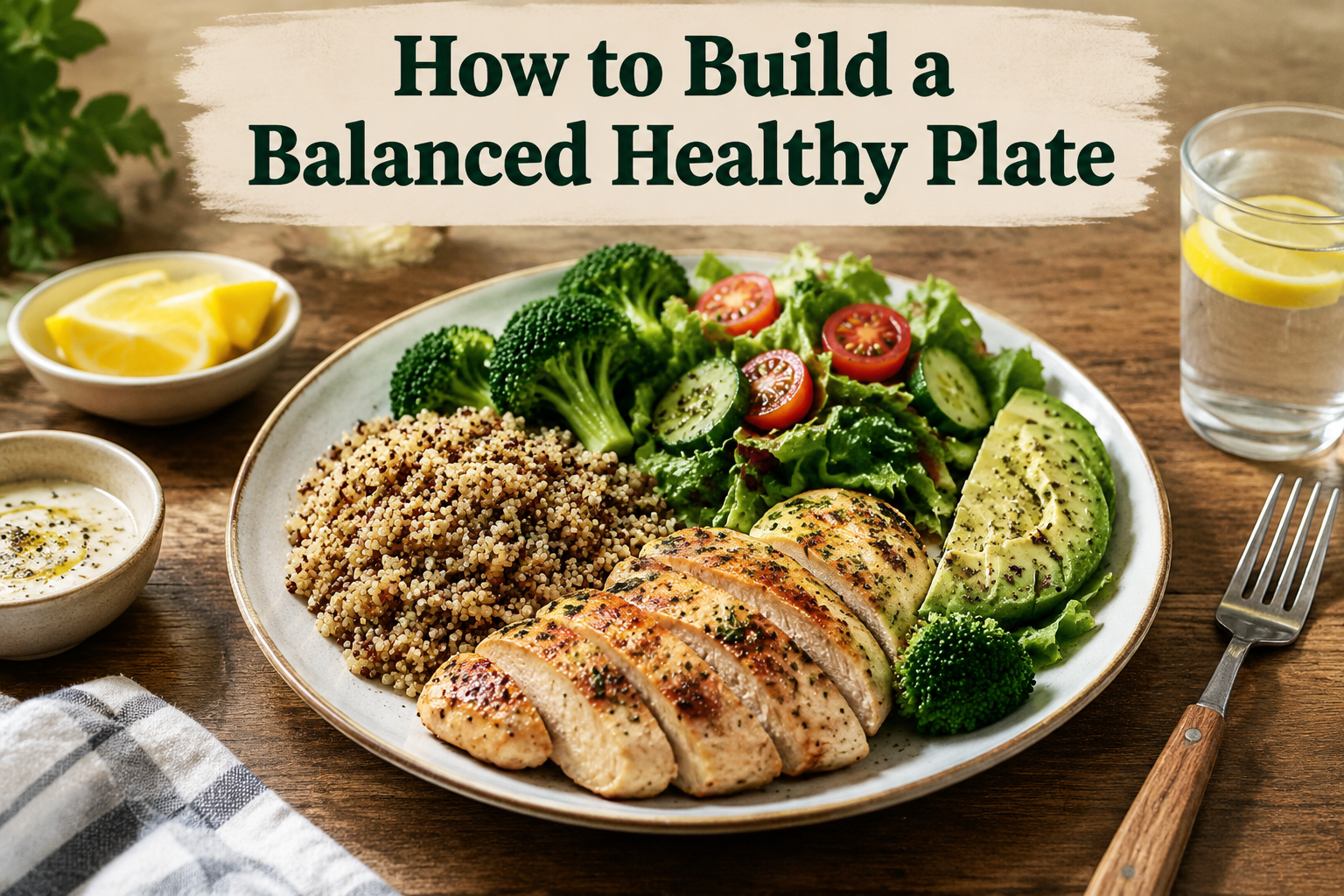
A balanced healthy plate is one of the easiest ways to improve your daily nutrition without following complicated diets or strict meal plans. Many people think healthy eating requires expensive foods, special supplements, or difficult cooking methods, but the truth is that a healthy lifestyle often begins with simple choices made at every meal. Learning how to build a balanced healthy plate helps your body receive the right combination of carbohydrates, proteins, healthy fats, vitamins, minerals, and fiber needed for energy, growth, and overall well being.
A healthy plate is not about removing all your favorite foods. It is about creating a better balance between different food groups so your body gets the nutrients it needs. When you understand the importance of portion sizes and food variety, you can enjoy delicious meals while supporting your health goals.
What Is a Balanced Healthy Plate?
A balanced healthy plate is a meal arrangement that includes different types of foods in the correct proportions. Instead of filling your plate with only one type of food, such as rice, bread, or meat, a balanced plate combines vegetables, fruits, protein sources, whole grains, and healthy fats.
The main purpose of a balanced healthy plate is to provide your body with complete nutrition. Every food group has a specific role. Carbohydrates provide energy, proteins help build and repair tissues, healthy fats support brain function, and vegetables and fruits provide important vitamins, minerals, and antioxidants.
Creating a balanced plate does not mean every meal must look perfect. The goal is to develop healthy eating habits that can be followed consistently for a long time.
The Basic Formula of a Healthy Plate
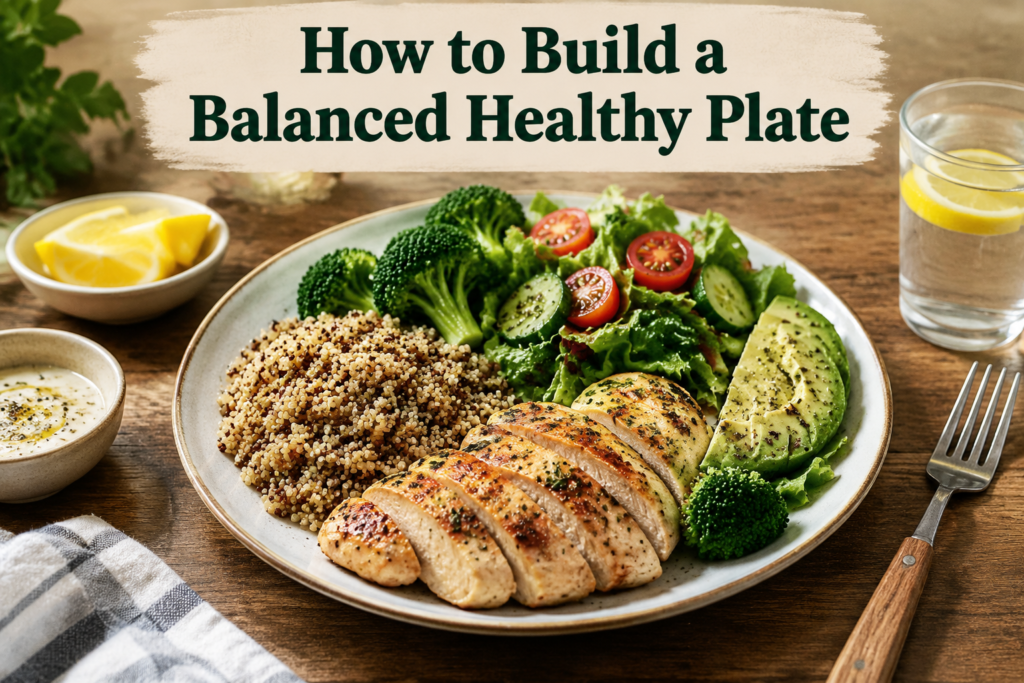
A simple way to build a balanced healthy plate is to divide your plate into sections. Half of your plate should usually contain vegetables and fruits. One quarter should include protein rich foods, and the remaining quarter should contain healthy carbohydrates.
This method makes it easier to control portions and ensures that your meal contains a variety of nutrients.
For example, a balanced lunch plate may include grilled chicken or lentils as a protein source, brown rice or whole wheat bread as a carbohydrate source, and a large serving of vegetables with a small portion of fruit.
The exact amount may change depending on your age, activity level, health goals, and lifestyle, but the basic idea remains the same.
Fill Half Your Plate With Vegetables and Fruits
Vegetables and fruits are important parts of a healthy diet because they are rich in vitamins, minerals, fiber, and natural plant compounds. They help support digestion, immunity, heart health, and healthy weight management.
Vegetables should make up a large portion of your plate because they are generally low in calories but high in nutrients. Green vegetables such as spinach, broccoli, lettuce, and cucumbers provide essential vitamins and minerals. Colorful vegetables like carrots, tomatoes, and peppers contain antioxidants that help protect body cells.
Fruits are also an important part of a balanced healthy plate. Apples, bananas, oranges, berries, and other fruits provide natural sweetness along with fiber and nutrients.
Try to include different colors on your plate because each color represents different beneficial compounds. A colorful plate is often a sign of a nutrient rich meal.
Add Quality Protein to Support Your Body
Protein is one of the most important nutrients for maintaining strong muscles, repairing tissues, and supporting many body functions. Including enough protein in your meals can also help you feel full for longer and reduce unnecessary snacking.
Healthy protein sources include eggs, fish, chicken, lean meat, beans, lentils, yogurt, milk, tofu, and nuts.
For people following a plant based diet, foods like lentils, chickpeas, beans, and soy products can provide excellent protein. Combining different plant proteins throughout the day can help provide a complete range of nutrients.
A balanced healthy plate should include a moderate portion of protein rather than making protein the largest part of the meal. Too much of one food group can reduce the overall balance of your diet.
Choose Healthy Carbohydrates for Energy
Carbohydrates are the main source of energy for your body. Many people avoid carbohydrates because of diet trends, but healthy carbohydrates are an important part of proper nutrition.
The key is choosing better sources of carbohydrates. Whole grains contain more fiber and nutrients compared to refined grains. Examples include brown rice, oats, whole wheat bread, and whole grain pasta.
Potatoes, sweet potatoes, corn, and other natural carbohydrate sources can also be part of a healthy meal when eaten in proper portions.
A balanced healthy plate does not remove carbohydrates. Instead, it focuses on choosing high quality carbohydrates that provide lasting energy.
Include Healthy Fats in Your Meals
Healthy fats are necessary for brain health, hormone production, and the absorption of certain vitamins. Although fats contain more calories than proteins and carbohydrates, they are still an important part of a balanced diet.
Good sources of healthy fats include olive oil, avocado, nuts, seeds, and fatty fish such as salmon.
Adding a small amount of healthy fat to your meals can improve taste and help your body absorb important nutrients. For example, adding nuts to a salad or using a small amount of olive oil with vegetables can make your meal more nutritious.
The goal is not to avoid fat completely but to choose healthier options and maintain reasonable portions.
The Importance of Portion Control
Even healthy foods can become unhealthy when eaten in excessive amounts. Portion control is an important part of building a balanced healthy plate.
Many people eat large portions without realizing it, especially when consuming foods high in calories. Learning to recognize appropriate serving sizes can help maintain a healthy weight and improve digestion.
Using a smaller plate can be a simple way to control portions. Eating slowly and paying attention to hunger signals can also prevent overeating.
A balanced healthy plate focuses on quality and quantity together. Both factors are important for long term health.
Add Fiber Rich Foods for Better Digestion
Fiber plays an important role in digestive health. It helps maintain regular bowel movements, supports healthy gut bacteria, and can help you feel satisfied after meals.
Vegetables, fruits, whole grains, beans, lentils, nuts, and seeds are excellent sources of dietary fiber.
Many modern diets contain too little fiber because they rely heavily on processed foods. Adding more fiber rich foods to your plate is a simple way to improve overall nutrition.
Remember to drink enough water when increasing fiber intake because water helps fiber work effectively in the digestive system.
Build a Healthy Plate for Weight Management
A balanced healthy plate can support healthy weight management because it focuses on nutrient rich foods instead of unnecessary calories.
Meals that contain vegetables, protein, and fiber can help control hunger and reduce cravings. Instead of following extreme diets, many people achieve better results by creating balanced meals they can maintain every day.
For weight management, focus on increasing vegetables, choosing lean proteins, controlling portions of carbohydrates, and reducing highly processed foods.
Healthy weight changes usually come from consistent habits rather than quick solutions.
Examples of Balanced Healthy Plates
A healthy breakfast plate could include oatmeal with fruit and nuts, along with yogurt or eggs for protein.
A balanced lunch plate could contain grilled chicken, brown rice, mixed vegetables, and a fresh salad.
A healthy dinner plate might include fish, lentil soup, whole wheat bread, and cooked vegetables.
Snacks can also be balanced by choosing options like fruit with nuts, yogurt, boiled eggs, or vegetable sticks.
The important thing is creating meals that contain a variety of nutrients rather than focusing on a single food.
Common Mistakes When Building a Healthy Plate
One common mistake is eating too many processed foods while ignoring vegetables and fruits. Packaged snacks, sugary drinks, and fast food may provide calories but often lack essential nutrients.
Another mistake is completely avoiding certain food groups. Removing carbohydrates or fats entirely can make meals less balanced and harder to maintain.
Some people also focus only on calories and ignore food quality. A healthy plate is not just about eating less. It is about eating better.
How to Make Healthy Eating a Daily Habit
Building a balanced healthy plate becomes easier when you plan your meals in advance. Keeping healthy ingredients available at home can help you make better choices.
Start with small changes instead of trying to change everything at once. Add more vegetables to your meals, replace refined grains with whole grains, and include a quality protein source regularly.
Consistency is more important than perfection. A healthy lifestyle develops through repeated choices made every day.
Final Thoughts on Building a Balanced Healthy Plate
Learning how to build a balanced healthy plate is a simple but powerful step toward better health. A nutritious meal does not need to be complicated or expensive. By including vegetables, fruits, proteins, healthy carbohydrates, and good fats in the right amounts, you can create meals that support energy, digestion, immunity, and overall wellness.
A balanced healthy plate is not a temporary diet plan. It is a practical approach to eating that can become part of your daily lifestyle. Small improvements in your meals can create meaningful changes in your health over time. The best healthy eating plan is the one you can follow consistently while enjoying the foods you love.