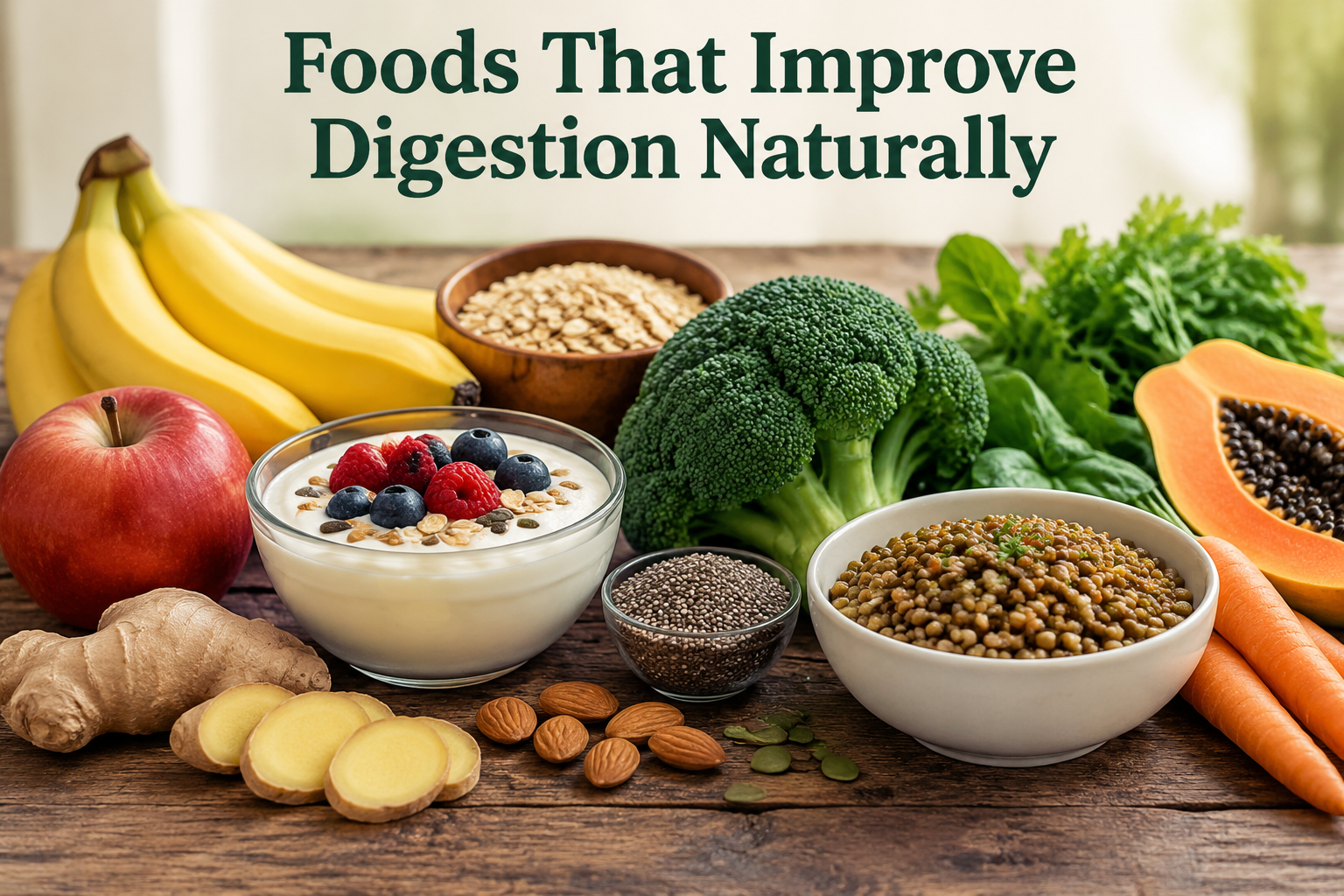
Good digestion is an important part of overall health because the digestive system helps the body absorb nutrients, produce energy, and remove waste. Many people experience digestive problems such as bloating, constipation, gas, acidity, and stomach discomfort due to unhealthy eating habits, stress, and a lack of fiber. The good news is that simple changes in your daily diet can support better digestion naturally.
Choosing the right foods can help your digestive system work smoothly. Foods rich in fiber, probiotics, enzymes, and natural nutrients can improve gut health and maintain a healthy balance of bacteria in the stomach and intestines. A healthy digestive system not only improves comfort but also supports immunity, energy levels, and overall wellness.
This article explores the best foods that improve digestion naturally and explains how they support your digestive health.
Why Healthy Digestion Matters
The digestive system is responsible for breaking down food into nutrients that the body needs for growth, repair, and daily activities. When digestion works properly, the body can absorb vitamins, minerals, proteins, and healthy fats efficiently.
Poor digestion can affect your daily life. Symptoms such as stomach heaviness, irregular bowel movements, bloating, and gas may indicate that your digestive system needs more support. Eating a balanced diet with natural digestive friendly foods can help maintain a healthy gut.
A strong digestive system also plays an important role in immune function. A large part of the immune system is connected to the gut, which means maintaining good gut health can help the body defend itself against illness.
Yogurt for Better Gut Health
Yogurt is one of the best foods for improving digestion naturally. It contains probiotics, which are beneficial bacteria that support a healthy balance of microorganisms in the gut.
These good bacteria help break down food, improve nutrient absorption, and support regular bowel movements. Eating yogurt regularly may also reduce digestive discomfort caused by an imbalance of gut bacteria.
Choose plain yogurt without added sugar because excessive sugar can negatively affect gut bacteria. You can add fresh fruits, nuts, or seeds to yogurt for extra fiber and nutrients.
For people who tolerate dairy products, yogurt can be a simple and effective addition to a digestion friendly diet.
Fiber Rich Fruits Improve Digestion
Fruits are naturally rich in fiber, vitamins, minerals, and antioxidants that support digestive health. Dietary fiber helps food move smoothly through the digestive system and prevents constipation.
Apples are a great source of soluble fiber called pectin, which helps improve bowel movement and supports healthy gut bacteria. Bananas are gentle on the stomach and contain fiber that helps maintain regular digestion.
Pears, berries, oranges, and papaya are also excellent choices. Papaya contains an enzyme called papain, which helps break down proteins and may support easier digestion.
Eating a variety of fruits daily can provide different types of fiber that benefit the digestive system.
Vegetables That Support Digestion
Vegetables are among the best natural foods for healthy digestion because they provide essential fiber and nutrients. Fiber adds bulk to stool and helps prevent digestive problems.
Leafy green vegetables such as spinach, lettuce, and kale contain magnesium and fiber that support smooth bowel movements. Broccoli and cauliflower provide nutrients and plant compounds that support gut health.
Carrots, sweet potatoes, and cucumbers are also helpful choices. These vegetables are easy to include in meals and can support a balanced digestive system.
Eating vegetables in different colors ensures that your body receives a wide range of nutrients that contribute to better health.
Oats for Smooth Digestion
Oats are an excellent breakfast choice for people who want to improve digestion naturally. They contain a type of soluble fiber called beta glucan, which helps support healthy gut bacteria.
The fiber in oats absorbs water and forms a soft texture in the digestive tract, making bowel movements easier. This can be especially helpful for people who experience constipation.
Oats also provide long lasting energy and help keep you feeling full for longer periods. Adding fruits, seeds, or yogurt can make an oat based meal even more beneficial for digestive health.
Ginger for Digestive Comfort
Ginger has been used traditionally for centuries to support digestion. It contains natural compounds that may help reduce nausea, stomach discomfort, and bloating.
Ginger can stimulate the digestive process and help food move more efficiently through the stomach. Drinking ginger tea or adding fresh ginger to meals can be an easy way to include it in your diet.
Many people find ginger helpful after heavy meals because it provides a soothing effect on the digestive system.
Garlic Supports a Healthy Gut
Garlic is another natural food that can support digestion. It contains compounds that may encourage the growth of beneficial bacteria in the gut.
A healthy balance of gut bacteria is important for proper digestion and nutrient absorption. Garlic also contains antioxidants and natural compounds that support overall wellness.
Adding garlic to soups, vegetables, and cooked meals can improve flavor while providing digestive benefits.
Nuts and Seeds for Digestive Health
Nuts and seeds are packed with fiber, healthy fats, and important nutrients. They can help improve digestion when consumed in moderate amounts.
Almonds, walnuts, chia seeds, and flaxseeds are excellent options. Chia seeds and flaxseeds contain soluble and insoluble fiber, which can support regular bowel movements.
These foods also provide healthy fats that may help maintain a balanced digestive environment. Adding a small amount of nuts or seeds to breakfast, yogurt, or smoothies can improve nutritional value.
Lentils and Beans for Natural Fiber
Lentils and beans are among the best plant based foods for digestion because they contain high amounts of fiber and protein.
Fiber helps keep the digestive system active and supports healthy bowel movements. Lentils are also rich in nutrients that support energy production and overall health.
However, some people may experience gas when eating beans or lentils. Increasing intake slowly and drinking enough water can help the body adjust.
Including these foods regularly can contribute to a healthier digestive system.
Whole Grains Improve Digestive Function
Whole grains such as brown rice, whole wheat, quinoa, and barley contain more fiber than refined grains. Fiber supports the movement of food through the digestive tract and helps maintain regular digestion.
Replacing refined grains with whole grain options can improve overall diet quality. Whole grains also provide vitamins and minerals that support body functions.
A balanced meal containing whole grains, vegetables, and protein can provide excellent support for digestive health.
Fermented Foods for Gut Balance
Fermented foods contain beneficial bacteria that can improve gut health. Examples include yogurt, kefir, kimchi, sauerkraut, and other naturally fermented foods.
These foods introduce helpful microorganisms into the digestive system, supporting a balanced gut environment.
Including fermented foods in your diet can be a natural way to support digestion and maintain healthy bacteria levels.
Water and Hydration for Better Digestion
Although water is not a food, it plays a major role in digestion. Proper hydration helps fiber work effectively and keeps stools soft.
Drinking enough water throughout the day supports the movement of food through the digestive tract and reduces the risk of constipation.
People who increase fiber intake should also increase water consumption because fiber requires water to function properly.
Foods to Limit for Better Digestion
While many foods support digestion, some foods can make digestive problems worse. Highly processed foods, excessive fried foods, sugary snacks, and artificial ingredients may negatively affect gut health.
Eating too many unhealthy fats or processed foods can slow digestion and increase discomfort. Reducing these foods and focusing on natural whole foods can make a significant difference.
A balanced diet does not mean avoiding every favorite food. It means creating healthy habits and maintaining moderation.
Tips to Improve Digestion Naturally
Eating slowly and chewing food properly can make digestion easier because the digestive process begins in the mouth.
Regular physical activity also supports digestion by encouraging movement in the digestive system. Walking after meals can be especially helpful.
Managing stress is another important factor because stress can affect stomach function and gut health. Relaxation techniques, proper sleep, and a balanced lifestyle can support better digestion.
Final Thoughts
Improving digestion naturally starts with simple food choices. Foods such as yogurt, fruits, vegetables, oats, ginger, garlic, nuts, seeds, lentils, and whole grains provide important nutrients that support a healthy digestive system.
A healthy gut requires consistency. Adding more natural, fiber rich, and probiotic foods to your daily meals can improve digestion and help you feel more comfortable and energetic.
Instead of relying only on quick solutions, building healthy eating habits is one of the best ways to support long term digestive health. A balanced diet combined with enough water, regular movement, and mindful eating can help your digestive system work naturally and efficiently.