
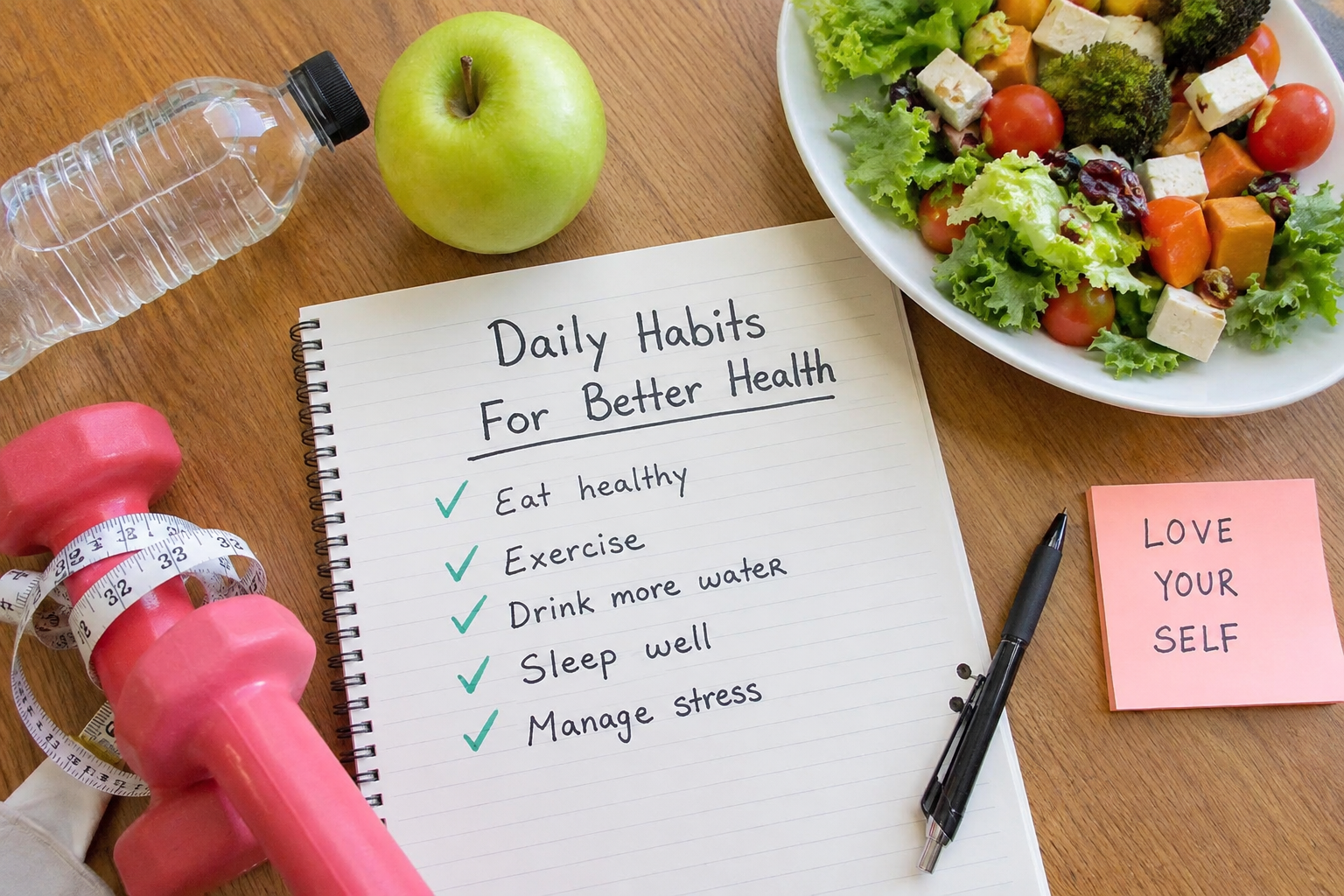
Good health does not always require major lifestyle changes. In many cases, simple daily habits can make a meaningful difference in how you feel, how much energy you have, and how well your body works. Healthy living is often about making small choices consistently rather than trying to change everything at once. By building practical habits into your everyday routine, you can support your physical health, mental well being, and overall quality of life.
This article explores simple daily habits that can improve your health and help you create a healthier lifestyle. These habits are easy to follow and can be adjusted according to your schedule, age, and personal needs.
Start Your Day With Water
One of the simplest healthy habits is drinking enough water throughout the day. Your body needs water to support digestion, circulation, temperature regulation, and many other important functions. Starting your morning with a glass of water can help you begin the day with good hydration.
Keep a water bottle nearby during work, study, or daily activities. Instead of waiting until you feel very thirsty, take regular sips throughout the day. The amount of water a person needs can vary depending on activity level, weather, diet, and individual health needs.
Replacing sugary drinks with water can also help reduce unnecessary sugar intake. Making water your main drink is a simple step toward better health.
Eat More Fruits and Vegetables
A healthy diet is one of the most important parts of a healthy lifestyle. Fruits and vegetables provide vitamins, minerals, fiber, and other nutrients that your body needs.
Try adding different types of fruits and vegetables to your daily meals. You can include fruit with breakfast, vegetables with lunch, and a colorful salad with dinner. Eating a variety of foods can make your meals more enjoyable while helping you get a broader range of nutrients.
You do not need to completely change your diet overnight. Start by adding one extra serving of vegetables or fruit to your daily routine. Small improvements can become long term healthy habits.
Make Time for Daily Physical Activity
Regular physical activity is another important daily habit that can improve your health. Exercise can support heart health, muscle strength, flexibility, balance, and overall fitness.
You do not necessarily need an expensive gym membership. Walking, cycling, stretching, household activities, and simple home exercises can all help you stay active. Even a short walk during the day can be useful if you spend many hours sitting.
Try to find an activity that you enjoy. When exercise feels enjoyable rather than like a punishment, it may be easier to make it a regular part of your routine.
Get Enough Quality Sleep
Sleep plays an important role in both physical and mental health. During sleep, the body gets an opportunity to rest and recover. Poor sleep can leave you feeling tired and can make it harder to concentrate during the day.
Create a regular sleep schedule by going to bed and waking up at approximately the same time each day. Keep your bedroom comfortable and reduce unnecessary distractions before bedtime.
Avoid spending too much time on phones or other screens immediately before sleep if you find that they make it harder for you to relax. A calm bedtime routine can help prepare your mind and body for rest.
Take Short Breaks From Sitting
Many people spend long periods sitting while working, studying, driving, or watching television. Sitting for extended periods can make your body feel stiff and reduce daily movement.
Make a habit of standing up and moving around regularly. Walk around your room, stretch your legs, refill your water bottle, or perform a few simple movements.
These short breaks may seem insignificant, but they can help you stay more active throughout the day. A healthy lifestyle is not only about formal exercise. Everyday movement also matters.
Practice Good Hand Hygiene
Good hygiene is a basic but important part of staying healthy. Washing your hands regularly can help remove germs and reduce the spread of infections.
Wash your hands with soap and clean water before eating and after using the bathroom. It is also helpful to wash your hands after returning home from public places and after activities that may leave your hands dirty.
This simple daily habit takes only a short amount of time but can be an important part of personal health.
Manage Daily Stress
Stress is a normal part of life, but constant stress can affect your overall well being. Finding healthy ways to manage everyday stress can help you feel calmer and more balanced.
Try simple activities such as deep breathing, walking outdoors, reading, writing in a journal, listening to relaxing music, or spending time with people you care about.
You do not need to spend hours practicing stress management. Even a few quiet minutes during a busy day can give you an opportunity to slow down and reset.
Spend Time Outdoors
Spending time outside can be a refreshing part of a healthy daily routine. Walking outdoors gives you an opportunity to move your body while taking a break from indoor environments.
You can take a morning walk, spend time in a garden, or simply sit outside for a few minutes. Outdoor activities can also provide a change of environment that may help you feel refreshed.
Try combining outdoor time with physical activity by walking around your neighborhood or visiting a nearby park.
Limit Highly Processed Foods
Healthy eating does not mean that you can never enjoy your favorite foods. However, making highly processed foods a smaller part of your regular diet can support better nutrition.
Try choosing more whole foods such as vegetables, fruits, beans, whole grains, nuts, seeds, eggs, and other nutritious options. Read food labels when possible and pay attention to added sugars, sodium, and portion sizes.
Instead of making extreme dietary changes, focus on creating a balanced eating pattern that you can maintain over time.
Practice Mindful Eating
Eating slowly and paying attention to your food can be another useful health habit. When people eat quickly while distracted, they may pay less attention to hunger and fullness signals.
Try eating meals without constantly watching television or scrolling through your phone. Take time to enjoy the taste, smell, and texture of your food.
Mindful eating can help you become more aware of your eating patterns and encourage a healthier relationship with food.
Maintain Good Personal Hygiene
Personal hygiene is an important part of everyday health. Regular bathing, brushing your teeth, changing clothes, and keeping your surroundings clean can support cleanliness and comfort.
Brush your teeth regularly and follow proper dental care practices. Keeping your living and working spaces reasonably clean can also create a more pleasant environment.
Simple hygiene habits are easy to overlook because they are part of everyday life, but consistency is important.
Build Healthy Social Connections
Health is not only about food and exercise. Social connections can also contribute to overall well being. Spending time with family, friends, classmates, coworkers, or other supportive people can help you feel connected.
Make time for meaningful conversations and shared activities. Even a short phone call or friendly conversation can make a positive difference in your day.
Healthy relationships can provide emotional support during difficult periods and make everyday life more enjoyable.
Reduce Unnecessary Screen Time
Technology is useful for work, education, communication, and entertainment, but spending too much time on screens can reduce physical activity and interfere with relaxation.
Set aside periods of the day when you step away from your phone or computer. Use that time for walking, reading, talking with family, preparing meals, or enjoying another activity.
Creating boundaries around screen use can help you make more room for healthy habits.
Make Preventive Health a Priority
One of the most valuable health habits is paying attention to your health before a problem becomes serious. Regular medical and dental checkups can help identify certain issues early.
Follow professional recommendations for screenings, vaccinations, and other preventive care that are appropriate for your age and individual situation. If you notice unusual or persistent symptoms, speak with a qualified healthcare professional instead of ignoring them.
Preventive care is an important part of maintaining long term health.
Create a Routine You Can Maintain
The most effective healthy habits are usually the ones you can maintain consistently. Trying to make too many changes at once can become overwhelming.
Start with one or two habits. For example, drink more water and take a daily walk. Once those habits become comfortable, add another positive change.
Do not expect perfection. Missing one workout or eating an unhealthy meal does not mean that you have failed. Simply return to your healthy routine at the next opportunity.
Conclusion
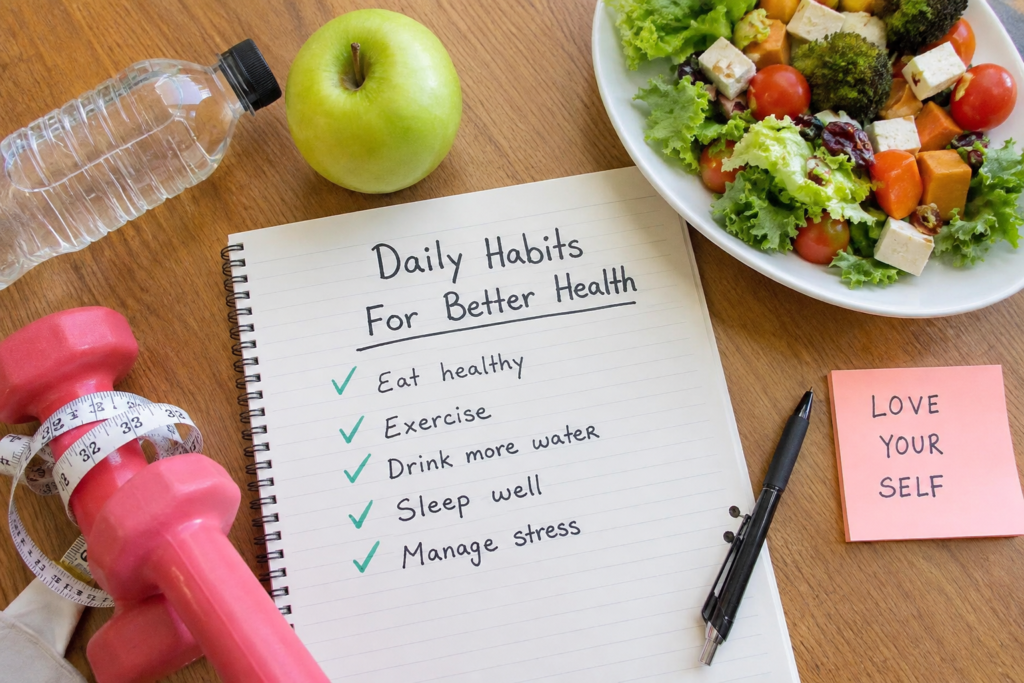
Simple daily habits can have a powerful effect on your overall health when practiced consistently. Drinking enough water, eating nutritious foods, staying physically active, getting quality sleep, managing stress, maintaining good hygiene, and spending time with supportive people are all practical ways to support a healthier lifestyle.
The key is to focus on progress rather than perfection. You do not need to transform your entire life in one day. Small choices repeated regularly can gradually become lasting habits.
Start with changes that feel realistic for your lifestyle and build from there. By making healthy choices part of your everyday routine, you can create a stronger foundation for better physical health, mental well being, and a healthier future.