Introduction
A healthy diet is not only about eating fewer calories or avoiding certain foods. It is about choosing natural foods that provide the body with essential nutrients, energy, and protection. Among these powerful foods, nuts and seeds have earned a special place because they contain a unique combination of healthy fats, protein, vitamins, minerals, fiber, and plant compounds.
For thousands of years, people have included nuts and seeds in their meals because they are nutritious, easy to store, and beneficial for overall health. Today, modern nutrition research also supports the idea that adding healthy nuts and seeds to a daily diet can improve heart health, support digestion, maintain energy levels, and help the body function properly.
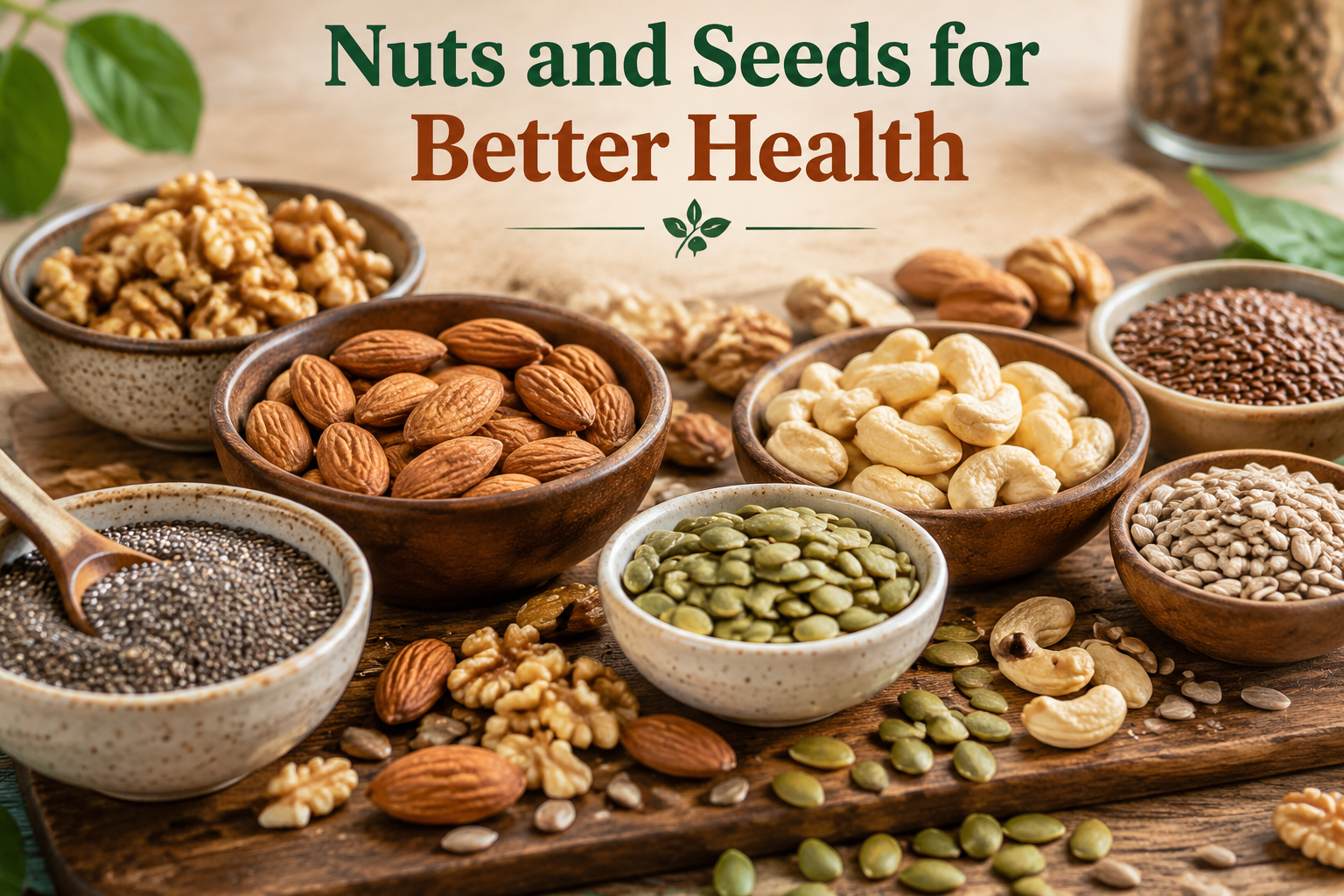
Nuts and seeds are small in size, but their nutritional value is impressive. Almonds, walnuts, pistachios, cashews, chia seeds, flaxseeds, pumpkin seeds, and sunflower seeds are some common examples that can provide important nutrients needed for a balanced lifestyle.
This article explains the benefits of nuts and seeds, their nutritional value, and why they can be an important part of a healthy eating routine.
What Are Nuts and Seeds?
Nuts are edible plant foods that usually contain a hard outer shell and a nutrient rich inner part. They are naturally high in healthy fats, protein, minerals, and antioxidants. Common examples include almonds, walnuts, peanuts, pistachios, and cashews.
Seeds are the small parts of plants that can grow into new plants. Many seeds are rich sources of fiber, healthy fats, minerals, and plant based nutrients. Popular healthy seeds include chia seeds, flaxseeds, pumpkin seeds, sunflower seeds, and sesame seeds.
Both nuts and seeds are considered nutrient dense foods because a small amount can provide many essential nutrients.
Nutritional Value of Nuts and Seeds
One of the main reasons nuts and seeds are considered healthy foods is their impressive nutritional profile. They contain several nutrients that support different functions in the body.
Healthy Fats
Many people think all fats are harmful, but the body needs healthy fats for proper function. Nuts and seeds contain unsaturated fats, including omega 3 fatty acids and monounsaturated fats.
These healthy fats support heart health, help maintain normal cholesterol levels, and provide long lasting energy.
Walnuts and flaxseeds are especially known for their omega 3 content, which is important for brain and heart health.
Plant Based Protein
Nuts and seeds are excellent sources of plant based protein. Protein is needed for muscle repair, tissue growth, and maintaining a strong immune system.
For people who prefer plant based diets, nuts and seeds can be an important source of protein. Adding almonds, pumpkin seeds, or chia seeds to meals can increase daily protein intake naturally.
Dietary Fiber
Fiber plays an important role in digestion and overall health. Nuts and seeds contain both soluble and insoluble fiber, which can help maintain healthy bowel movements and support digestive function.
Chia seeds and flaxseeds are especially rich in fiber, making them helpful choices for people looking to improve digestion.
Vitamins and Minerals
Nuts and seeds provide many important vitamins and minerals, including magnesium, calcium, iron, zinc, vitamin E, and selenium.
Almonds are rich in vitamin E, which helps protect cells from damage. Pumpkin seeds contain magnesium, which supports muscles and nerves. Sesame seeds provide calcium, which is important for strong bones.
Benefits of Eating Nuts and Seeds Daily
Supports Heart Health
One of the most recognized benefits of nuts and seeds is their positive effect on heart health.
Research shows that regular consumption of nuts may help maintain healthy cholesterol levels. The healthy fats, fiber, and antioxidants found in nuts can support the cardiovascular system.
Walnuts, almonds, and pistachios are often considered some of the best nuts for heart health because they contain nutrients that support healthy blood vessels and normal heart function.
Including a small portion of nuts and seeds in your daily diet can be a simple step toward a healthier heart.
Helps Improve Digestion
A healthy digestive system is important for overall wellbeing. The fiber found in nuts and seeds helps food move smoothly through the digestive system.
Fiber also supports beneficial bacteria in the gut. A balanced gut environment can improve digestion and support the immune system.
Chia seeds and flaxseeds absorb water and form a gel like texture, which can help improve bowel regularity when consumed with enough fluids.
Provides Long Lasting Energy
Many snacks provide quick energy but leave you feeling tired after a short time. Nuts and seeds provide a combination of healthy fats, protein, and fiber that helps maintain steady energy levels.
A handful of almonds, walnuts, or pumpkin seeds can be a better snack choice compared to highly processed foods containing added sugar.
For students, professionals, and active people, nuts and seeds can provide natural energy throughout the day.
Supports Brain Health
The brain requires healthy fats and nutrients to function properly. Nuts and seeds contain nutrients that support brain health and cognitive function.
Walnuts are particularly known for their omega 3 fatty acids, which are important for brain development and communication between brain cells.
Vitamin E found in almonds and other nuts also helps protect cells from oxidative stress.
Adding nuts and seeds to a balanced diet can support concentration, memory, and overall brain function.
Helps Maintain Healthy Weight
Although nuts and seeds are calorie dense, they can still be part of a healthy weight management plan.
Their combination of protein, fiber, and healthy fats helps increase feelings of fullness. This can reduce unnecessary snacking and help control hunger.
Eating a moderate amount of nuts and seeds can support a balanced diet without causing excessive calorie intake.
The key is portion control because even healthy foods should be consumed in reasonable amounts.
Strengthens Bones
Strong bones require important minerals such as calcium, magnesium, and phosphorus. Many nuts and seeds provide these nutrients naturally.
Sesame seeds, almonds, and chia seeds contain minerals that contribute to bone strength.
Including different types of nuts and seeds in your diet can help provide nutrients needed for maintaining healthy bones throughout life.
Supports Immune Function
A strong immune system depends on a variety of nutrients. Nuts and seeds contain antioxidants, zinc, selenium, and vitamin E that help support the body’s natural defense system.
Pumpkin seeds are a good source of zinc, which plays a role in immune function. Almonds provide vitamin E, which protects cells from damage.
A diet rich in nutrient dense foods can help the body stay stronger and healthier.
Best Nuts for Better Health
Different nuts provide different nutritional benefits. Including a variety of nuts can help you receive a wider range of nutrients.
Almonds
Almonds are one of the most popular healthy nuts. They are rich in vitamin E, magnesium, protein, and fiber.
They are commonly linked with heart health, skin health, and improved nutrition.
Walnuts
Walnuts are known for their omega 3 fatty acids and antioxidant content. They are considered one of the best nuts for supporting brain and heart health.
Pistachios
Pistachios contain protein, fiber, and antioxidants. They are a nutritious snack that can help provide energy and support a balanced diet.
Cashews
Cashews provide minerals such as magnesium, copper, and zinc. They have a creamy texture and can be added to many meals.
Peanuts
Although technically a legume, peanuts are commonly grouped with nuts because of their similar nutritional benefits. They provide protein, healthy fats, and important minerals.
Best Seeds for Better Health
Chia Seeds
Chia seeds are rich in fiber, omega 3 fatty acids, and minerals. They can be added to smoothies, yogurt, and breakfast meals.
Flaxseeds
Flaxseeds provide omega 3 fats and fiber. They are often used to support digestion and overall nutrition.
Pumpkin Seeds
Pumpkin seeds contain magnesium, zinc, protein, and antioxidants. They make a healthy snack and can be added to salads.
Sunflower Seeds
Sunflower seeds provide vitamin E, healthy fats, and minerals. They are a simple way to increase nutrient intake.
Sesame Seeds
Sesame seeds contain calcium, healthy fats, and antioxidants. They are commonly used in many traditional foods around the world.
How Much Nuts and Seeds Should You Eat Daily?
Although nuts and seeds are healthy, eating the right amount is important. A moderate serving is usually enough to provide health benefits.
A small handful of mixed nuts and seeds can be a suitable daily portion for many people. The exact amount depends on individual calorie needs, activity level, and overall diet.
It is better to choose natural or lightly roasted nuts without excessive salt, sugar, or unhealthy coatings.
Simple Ways to Add Nuts and Seeds to Your Diet
Adding nuts and seeds to daily meals is easy. They can be included in many different ways.
You can add chia seeds or flaxseeds to smoothies and yogurt. Almonds and walnuts can be eaten as a healthy snack. Pumpkin and sunflower seeds can be sprinkled over salads or soups.
Nuts can also be added to oatmeal, homemade energy bars, and breakfast meals.
Small changes in eating habits can create long term health benefits.
Things to Consider Before Eating Nuts and Seeds
Most people can safely enjoy nuts and seeds, but some individuals may have allergies. People with nut allergies should avoid specific nuts and consult healthcare professionals when needed.
It is also important to avoid heavily processed varieties with extra salt, sugar, or artificial flavors.
Choosing fresh, natural nuts and seeds is the best option for maximizing health benefits.
Conclusion
Nuts and seeds are among the most nutritious natural foods available. They provide healthy fats, protein, fiber, vitamins, minerals, and antioxidants that support many areas of health.
From improving heart health and digestion to supporting brain function and energy levels, the benefits of nuts and seeds make them a valuable addition to a balanced diet.
Eating a small amount of different nuts and seeds every day can help provide essential nutrients that the body needs. They are simple, affordable, and easy to include in everyday meals.
A healthy lifestyle is built through consistent choices. Adding healthy nuts and seeds to your daily routine can be one of those simple choices that supports better health for years to come.